[VT | May 10, 2026 | Philadelphia PA]
Philadelphia Surgeon Dr. Ala Stanford Runs for Congress in Pennsylvania’s 3rd District
The 2026 congressional election in Pennsylvania is underway. Physician Dr. Ala Stanford is currently running for the U.S. House of Representatives seat in Pennsylvania’s 3rd Congressional District (PA-03).
Pennsylvania’s 3rd Congressional District covers much of Philadelphia and has long been considered a strongly Democratic district. With current Congressman Dwight Evans announcing his retirement, the seat has become open for the first time in 35 years, drawing attention from both Philadelphia and national Democratic political circles.
This profile looks at:
- Who Ala Stanford is
- Her major policy positions
- Her healthcare and public service background
- Issues relevant to Chinese American and Asian American communities
- Her public service record
Candidate Background
Ala Stanford was born and raised in North Philadelphia and the Germantown community.
She graduated from Pennsylvania State University and later earned her medical degree from the Penn State College of Medicine.
After completing her residency training, she became the first Black woman pediatric surgeon fully trained in the United States.
She has worked at institutions including:
- Temple University
- Abington Memorial Hospital
- University of Pennsylvania
and has long been involved in pediatric surgery and public health work.
During the COVID-19 pandemic, Stanford founded the Black Doctors COVID-19 Consortium, which provided free testing, vaccinations, and healthcare services across Philadelphia communities.
In 2022, she was appointed by then-President Joe Biden to serve as Regional Director for Region 3 of the U.S. Department of Health and Human Services (HHS), overseeing federal health-related matters across Pennsylvania and several surrounding states.
Major Policy Positions
Healthcare Policy
Healthcare is one of the central issues in Stanford’s campaign.
According to her campaign platform, she supports:
- Expanding the Affordable Care Act
- Creating a public healthcare option
- Advancing single-payer healthcare proposals
- Lowering prescription drug costs
- Expanding mental health services
- Protecting reproductive healthcare and IVF-related services
Stanford has stated that access to healthcare should not depend on income, identity, or zip code.
During a 2024 public event in Pennsylvania, Stanford said:
“Healthcare is a right, not just a privilege for those who can afford it.”
During the event, she also discussed issues including:
- Healthcare accessibility
- Mental health
- Maternal health
- Infant mortality
- Prescription drug costs
Stanford also publicly discussed her experience becoming a mother through IVF and voiced support for protecting IVF-related healthcare access.
She stated:
“Without IVF, I would not have given birth to my three beautiful children.”
Housing Policy
Stanford has said that she spent part of her childhood living in subsidized housing.
She supports:
- Increasing public housing funding
- Expanding housing voucher programs
- Building affordable housing
- Supporting first-time homebuyers
- Limiting large institutional investors from purchasing large amounts of housing inventory
Immigration Policy
According to her campaign platform, Stanford supports:
- Creating pathways to legal status for undocumented immigrants
- Protecting DACA recipients
- Expanding immigration court resources
She has also expressed support for abolishing ICE.
Education Policy
Stanford has stated that federal education programs helped her complete college.
She supports:
- Increasing Title I and IDEA education funding
- Expanding Pell Grants
- Investing in public school infrastructure
- Supporting community college and vocational education programs
- Increasing funding for Historically Black Colleges and Universities (HBCUs)
Social Welfare and Cost of Living Issues
Stanford has said that during her childhood, her family relied on programs including SNAP food assistance, Medicaid, and public housing.
She opposes cuts to federal programs including:
- Medicaid
- Medicare
- Social Security
She also supports:
- Raising the minimum wage
- Expanding the child tax credit
- Strengthening anti-price-gouging enforcement
Issues Relevant to Chinese American and Asian American Communities
Healthcare and Public Health
During the pandemic, Asian American communities in Philadelphia also faced challenges involving:
- Access to healthcare resources
- Vaccine appointment systems
- Multilingual public health information
In early 2021, COVID-19 vaccines in the United States remained in limited supply. At the time, vaccinations were primarily prioritized for healthcare workers, nursing home residents, and higher-risk seniors aged 65 and older, while vaccine appointments remained difficult to obtain across many Philadelphia communities.
In January 2021, Civic Infrastructure – ChineseinUS — communicated with Ala Stanford regarding vaccine registration questions raised by members of the local Chinese community.
At the time, some residents were uncertain whether they had successfully completed vaccine registration forms. Chinese in Greater Philadelphia later contacted the Black Doctors COVID-19 Consortium to ask about the registration process.
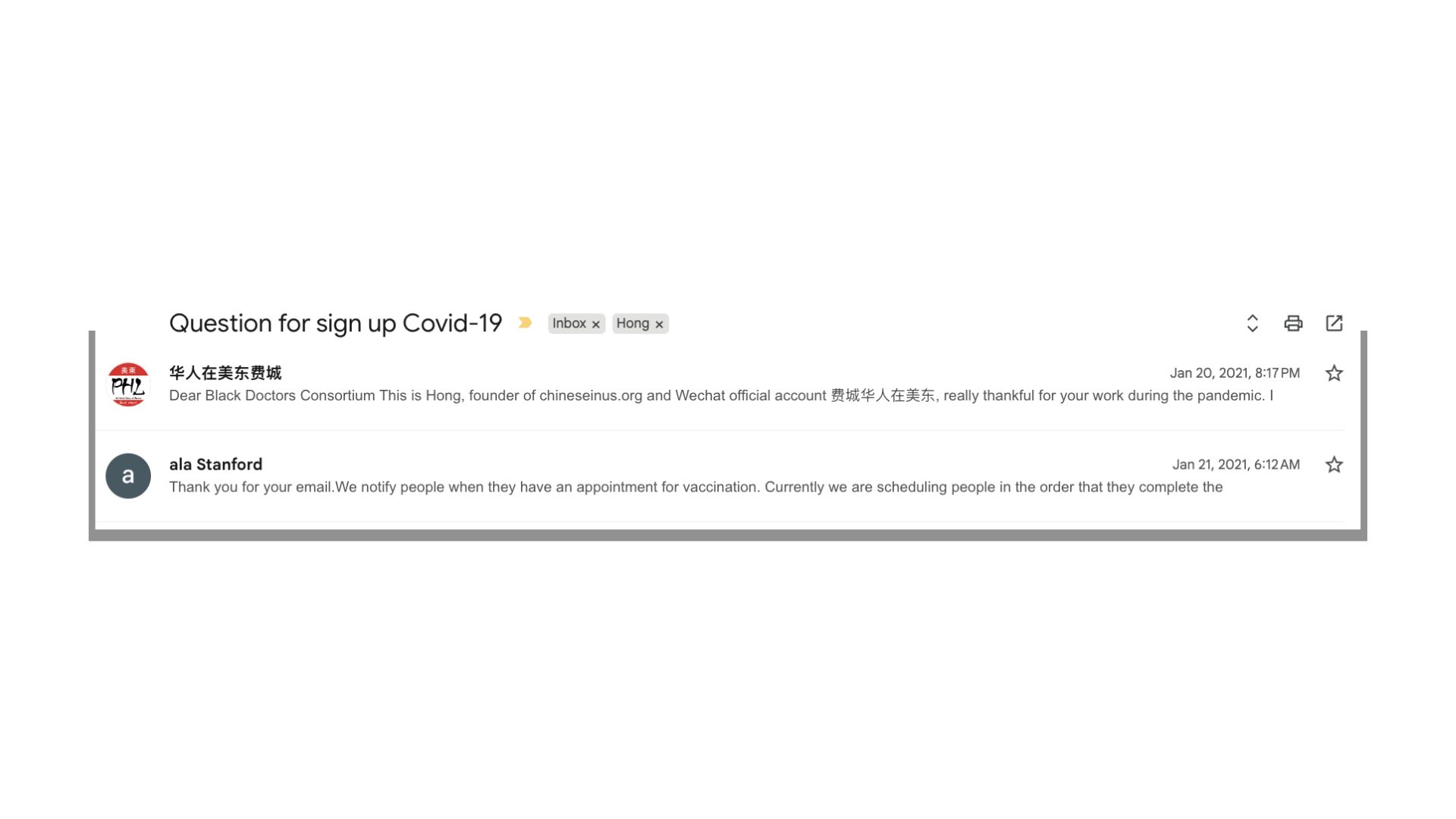
In a January 21, 2021 email response, Stanford stated that approximately 13,000 people had already registered for vaccinations, while about 2,100 appointments had been scheduled at that stage. She explained that appointments were being processed based on registration order and noted that vaccination capacity would continue expanding as additional vaccine supply became available.
She also noted that if appointment openings became available due to no-shows, her team would post updates through social media channels.
At the time, the Black Doctors COVID-19 Consortium had already begun offering vaccine registration and vaccination services through community forms, churches, community centers, and mobile vaccination sites across Philadelphia neighborhoods.
Lunar New Year Greetings to the Chinese Community
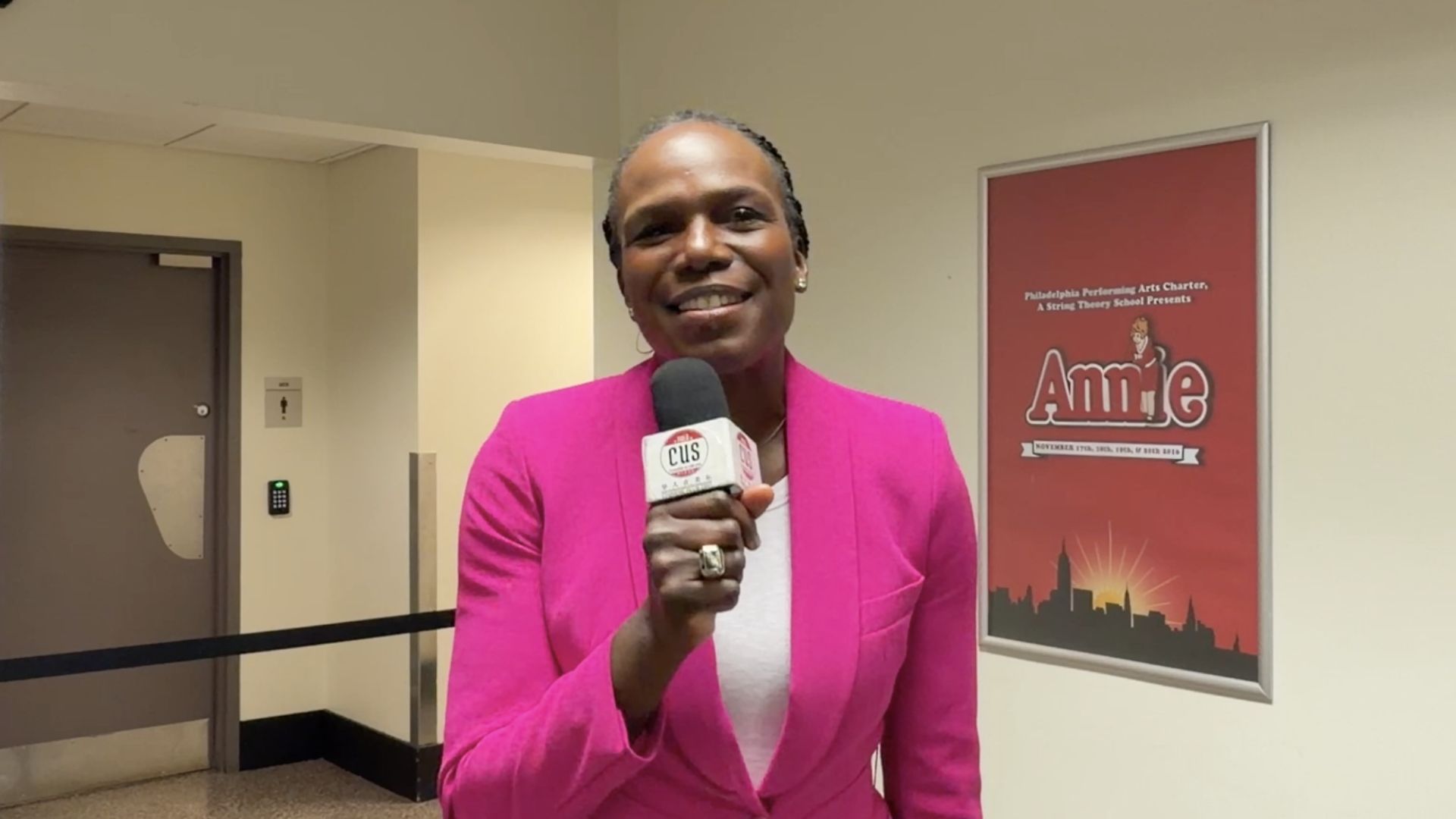
During the 2026 Lunar New Year season, Ala Stanford shared a Lunar New Year greeting video with Chinese and Asian American communities in Philadelphia through ChineseinUS.
In the video, she introduced her congressional campaign and referenced her work providing testing, vaccinations, and public health resources during the COVID-19 pandemic.
She also stated that she hoped to continue serving communities across Pennsylvania’s 3rd Congressional District in the future.
Small Business and Cost of Living
Many Asian American families and immigrant communities in Philadelphia continue to pay close attention to issues involving:
- Rising rent
- Healthcare costs
- Food and energy prices
- Small business conditions
Stanford’s campaign has also focused on cost-of-living and social welfare-related issues.
Education and Community Resources
Education funding, public school facilities, and college affordability policies continue to affect many immigrant and Asian American families across Philadelphia.
Public Service Record
During the COVID-19 pandemic, Stanford’s Black Doctors COVID-19 Consortium provided testing and vaccination services across multiple Philadelphia communities.
She has also received public service-related recognitions including:
- CNN Heroes
- USA Today Women of the Year
- The Philadelphia Award
In 2025, Stanford announced her campaign for Pennsylvania’s 3rd Congressional District and received the endorsement of current Congressman Dwight Evans.
Campaign Website and Social Media
Campaign Website, Instagram, Youtube, Facebook, X
Why This Election Matters
Pennsylvania’s 3rd Congressional District has long leaned Democratic, but the retirement of Congressman Dwight Evans has made the 2026 Democratic primary one of Philadelphia’s most closely watched races.
The next member of Congress will help shape federal decisions involving:
- Healthcare policy
- Education funding
- Immigration policy
- Housing policy
- Allocation of federal community resources
For immigrant communities in Philadelphia, understanding candidates’ policy positions and public records may increasingly affect access to public resources, language services, and civic participation opportunities.