[VT | July 22, 2026 | Washington D.C.]
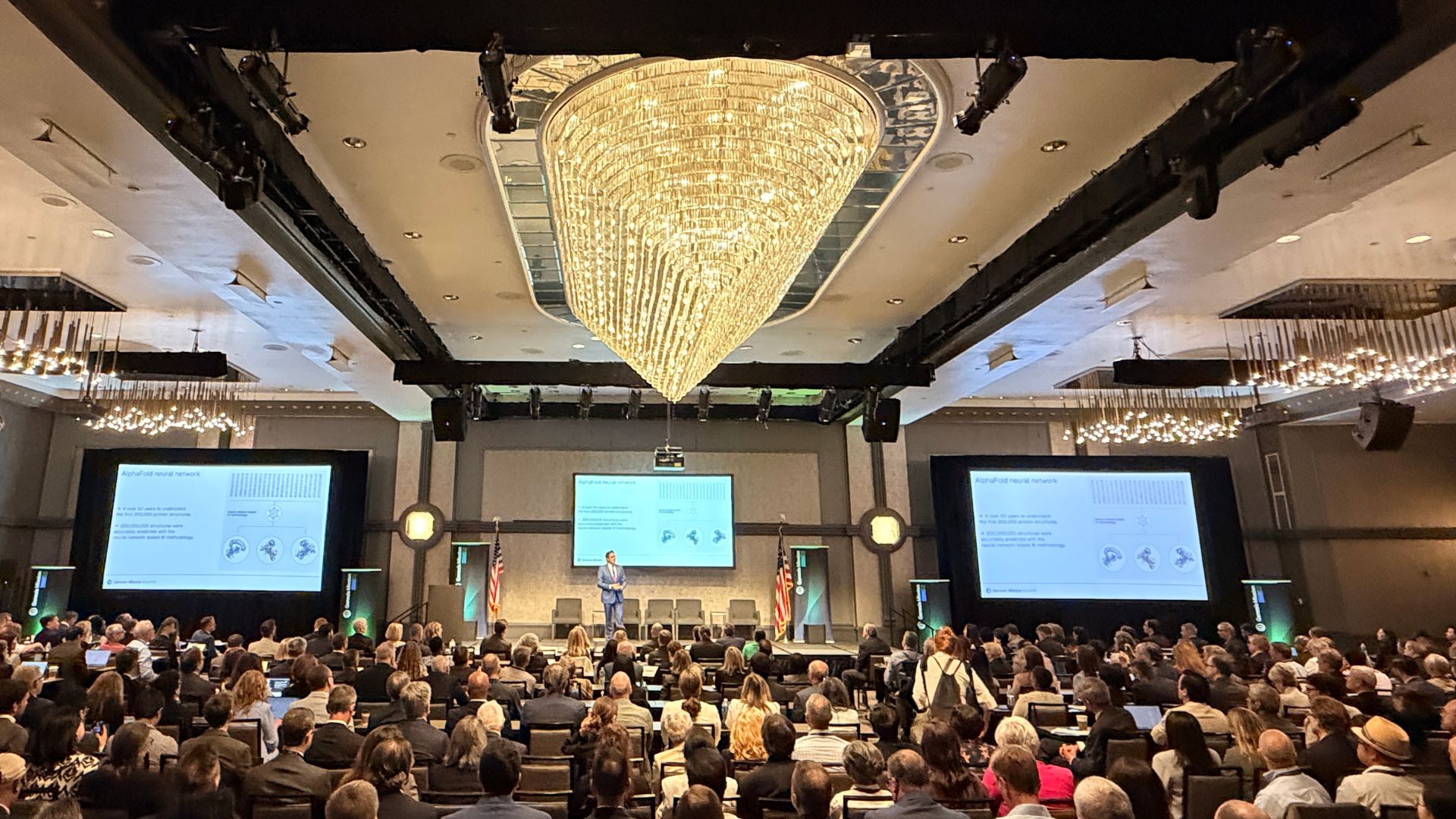
Darío Gil, Under Secretary for Science at the U.S. Department of Energy (DOE) and head of the Genesis Mission, described the platform being built under the initiative as an “Internet of Science”: connecting AI models, AI agents, scientific data and supercomputers with research facilities including particle accelerators, telescopes and microscopes.
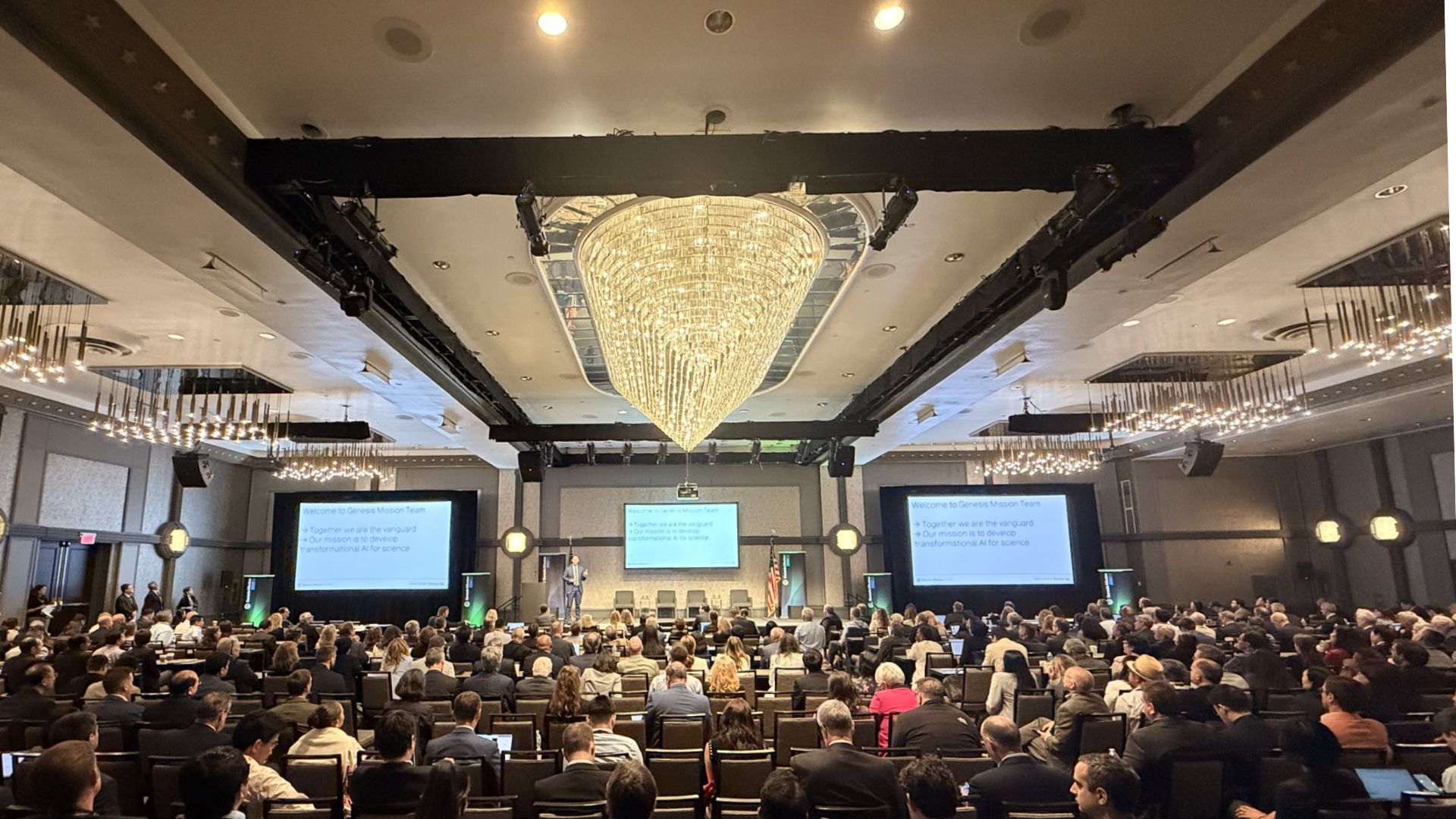
During the inaugural Genesis Mission Summit, companies and national laboratories presented resources they are contributing, the technical team demonstrated the platform, and researchers from the first 278 selected projects joined breakout discussions on AI agents, data and federation.
Industry and National Laboratories
U.S. Secretary of Energy Chris Wright moderated the Partnership Panel, joined by John Sarrao, Laboratory Director of SLAC National Accelerator Laboratory; Karthik Narain, Chief Product and Business Officer of Google Cloud; and Misha Laskin, Chief Executive Officer of Reflection AI.
Google announced $40 million in AI tokens and cloud credits for the Genesis Mission, along with access for selected teams to tools including AlphaEvolve, AlphaFold 3, AlphaGenome, WeatherNext and AlphaEarth Foundations. Google also announced Gemini for Government resources for the DOE national laboratory system.
Genesis Mission projects are required to include collaboration across at least two of three sectors — universities, national laboratories and industry — with larger projects requiring participation from all three. Wright asked during the discussion whether this amounted to a “forced partnership.”
Sarrao said he preferred to view the arrangement as an opportunity: national laboratories have accumulated decades of scientific facilities, data and research capabilities, while industry partners can help move scientific results into real-world applications.
Narain said that without a common framework, it would be difficult for Google to determine where among national laboratories, universities and research teams its models and cloud resources could be most effectively directed.
Laskin discussed her own background in theoretical physics and the recent development of AI capabilities for scientific problems. She said open and closed models are likely to coexist and serve different types of scientific work.
Platform Demonstration
Brian Spears, Technical Director for the DOE’s Genesis Mission and Director of the Artificial Intelligence Innovation Incubator at Lawrence Livermore National Laboratory (LLNL), demonstrated the platform.
Spears said a cross-institutional single sign-on system has been established, allowing researchers from different national laboratories and partner institutions to access resources through a common identity framework.
The platform also includes a Model Access Gateway, through which researchers can access models and computing resources from partners including AWS, Google and OpenAI without establishing separate accounts with each provider. Spears said resources available through the mechanism have a combined value of more than $150 million.
More than 300 AI agents and specialized models are currently registered on the platform. A data resource catalog includes metadata cards that can be searched by both researchers and AI agents. Tools and guidance are also available through Genesis Education and Resources (GEAR). Public technical documentation for the American Science Cloud lists the Model Access Gateway and identifies GEAR as an onboarding resource for Genesis Mission RFA teams, covering areas including data management, safety and assurance, AI and agents, and resource access.
Spears demonstrated several scientific workflows. In a materials science example, an AI assistant called a hypothesis-generation agent to propose candidate battery electrolytes, then passed the candidates to MIST, a materials foundation model developed by a University of Michigan team, for scoring and automated analysis.
In an inertial-confinement fusion example, an AI agent orchestrated simulations across multiple supercomputers and, after the simulations were completed, read the results, developed an analysis procedure, generated plots and wrote processing code. Another demonstration showed an AI agent using robotic-control tools to send instructions to instruments in an automated laboratory, move samples and conduct tests.
Spears described the current platform as “completely, totally incomplete.”
Lux and Discovery Supercomputers
The platform demonstration also included Stephen Streiffer, Laboratory Director of Oak Ridge National Laboratory (ORNL), and Thomas Zacharia, Senior Vice President for Strategic Technology Partnerships and Public Policy at AMD.
Streiffer discussed two new supercomputers. Lux is expected to come online in October 2026 and become part of the Genesis Mission infrastructure. Discovery is expected to be delivered in 2028 and will succeed Frontier at Oak Ridge as the laboratory’s next flagship computing platform.
Both systems are being delivered by AMD and HPE. Zacharia discussed their technical design, including support within a common computing environment for scientific simulation, AI training, inference and agent-driven scientific workflows.
American Science Cloud
During a press Q&A held as part of the summit, Stephen Streiffer, Laboratory Director of Oak Ridge National Laboratory (ORNL), and Gina Tourassi, Associate Laboratory Director for Computing and Computational Sciences at ORNL, discussed the laboratory’s work related to the Genesis Mission and the American Science Cloud (AmSC).
Tourassi said efforts to federate computing resources across the DOE system had been underway for years, preceding the Genesis Mission. The Genesis Mission expanded the scope to include additional scientific resources such as experimental instruments and datasets.
The American Science Cloud formally launched in October 2025. Public technical documentation describes it as a scientific computing platform connecting high-performance computing, AI and machine-learning services, and scientific data infrastructure across the DOE national laboratory system.
Tourassi also said single sign-on was among the first issues the team addressed. The work involved not only technical challenges but also policy and administrative coordination among institutions, with the team working on both sides of the problem over the preceding months.
Princeton Plasma Physics Laboratory: “A Platform Within a Platform”
Steven Cowley, Laboratory Director of Princeton Plasma Physics Laboratory (PPPL), also discussed the laboratory’s role in building the platform during the press Q&A.
Cowley said PPPL computational scientists are integrating some fusion research codes into the platform so that specialized scientific codes can be called as agents. He described the specialized research environment as “a platform within a platform.”
During the same press Q&A, Johney Green, Laboratory Director and President of Battelle Savannah River Alliance at Savannah River National Laboratory (SRNL), discussed the laboratory’s use of AI in research related to nuclear waste processing.A Proposed Scale of About 10,000 AI Agents
Rick Stevens, Associate Laboratory Director for the Computing, Environment and Life Sciences Directorate at Argonne National Laboratory (ANL), described one proposed approach to scaling AI agents during the Panel Discussion and Breakout Groups.
Stevens described recording the inputs, outputs and process data generated as AI agents perform scientific tasks, using those data to continuously improve underlying models and allowing experience accumulated by different agents to enter a shared environment. He referred to the process as a “flywheel.”
Stevens said the team had analyzed the 278 projects and initially estimated that supporting the full portfolio in this way could require approximately 10,000 AI agents. The figure was presented as a current estimate of potential scale, not as the number of agents already deployed.
Breakout Discussions With the 278 Teams
Researchers from the 278 inaugural Genesis Mission projects participated in a panel discussion and breakout groups focused on AI agents and computational models, data, and federation.
The session was moderated by Kathryn Moler, Chodorow Professor at Stanford University. Participants also included Stevens; Spears; Tourassi; Andy Schwartz, Deputy Associate Director for Basic Energy Sciences at the DOE Office of Science; and Kelly Rose, Genesis Data Research & Development Lead at the U.S. Department of Energy.
The selected teams held breakout discussions around three areas: AI agents and computational models, data, and federation.
Recognition and incentives for contributions. One participant raised the distinction between building a platform and enabling individuals who contribute data, models or expertise to benefit from those contributions. The participant noted that science has traditionally recognized contributions through authorship and citations but lacks a corresponding “monetization” mechanism. Stevens called it both a good and difficult question. He described the environment being built as a “commons” and discussed the need to consider appropriate incentive mechanisms.
Results verification. One participant said AI could produce content far faster than humans could verify it, while commercial models could appear “confident” even when their outputs might be wrong, and suggested that models provide confidence scores.
Spears referred to ideas about formal verification discussed earlier in the day by Terence Tao, a Fields Medalist and professor at the University of California, Los Angeles (UCLA), during the Science Lightning Talks. Spears discussed using verifiable results from high-performance computing to check hypotheses generated by AI. Stevens also raised the possibility of models performing mutual or “adversarial” verification.
Identity portability. One participant asked whether researchers who changed institutions would still be able to use the platform. Andy Schwartz said DOE’s experience operating large open scientific facilities offered one model: reciprocity arrangements exist among institutions, and researchers can submit new applications to obtain appropriate access under a new institutional affiliation.
Tourassi added that she regarded this as one of the important issues in platform design. No specific process or timeline was provided during the discussion.
Data sharing and federation. Participants raised questions about how researchers could determine what data exist and what they are authorized to access, whether sensitive data could be processed before sharing, and how intellectual property and security would be handled in a federated environment.
Tourassi said the scope of federation involved in the Genesis Mission exceeds previous similar efforts, and that technical problems may prove easier to address than policy and governance issues. GEAR currently includes a developing data resource catalog to which participants can submit additional resources. Data handling, traceability, identity and access mechanisms were also among the issues discussed during the session.
At the end of the breakout session, the 278 selected teams were asked to leave their group discussion notes.
—
VisibleTogether reported from the inaugural Genesis Mission Annual Summit in Washington, D.C., on July 22, 2026.