[VT | July 22, 2026 | Washington D.C.]
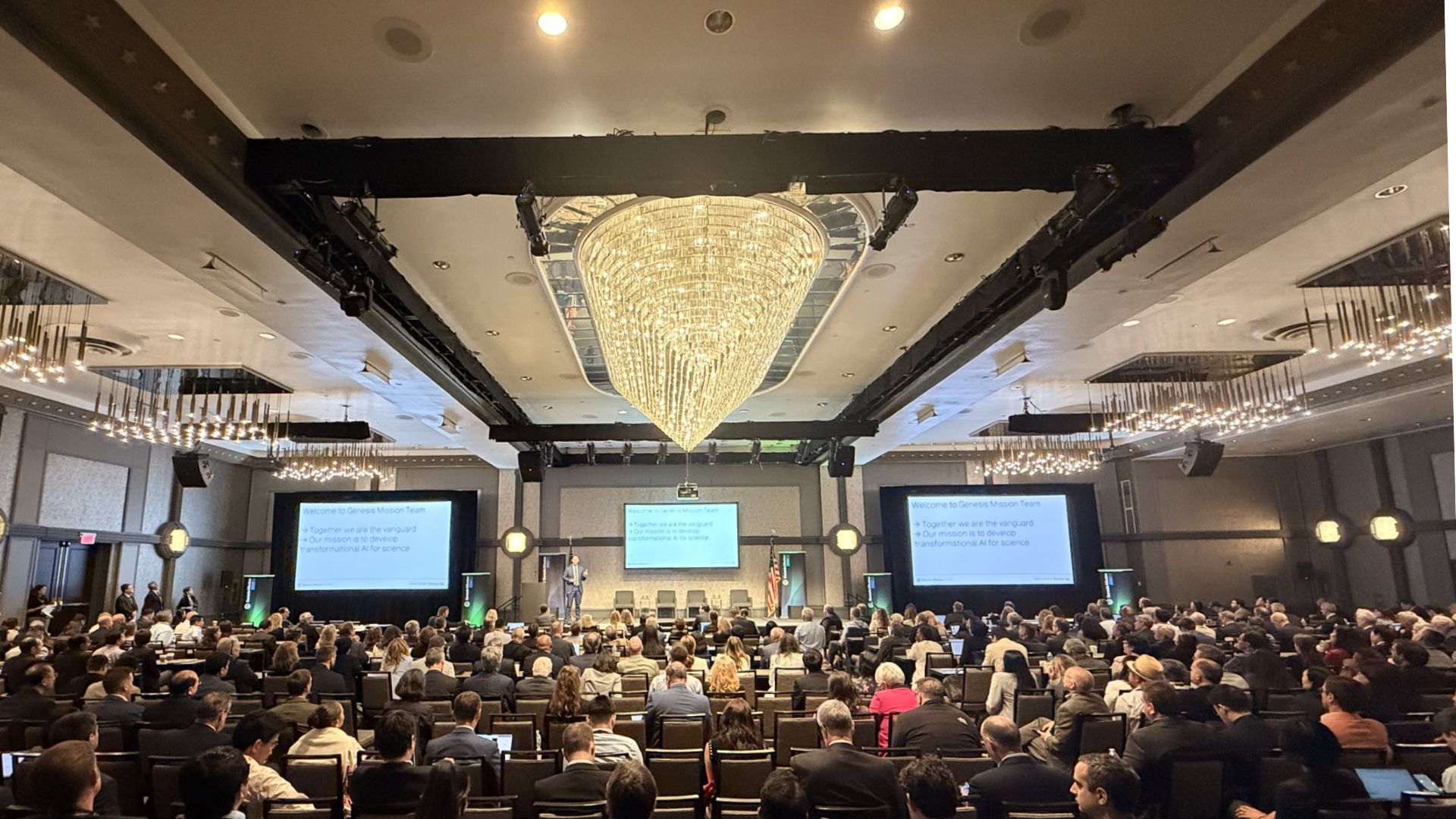
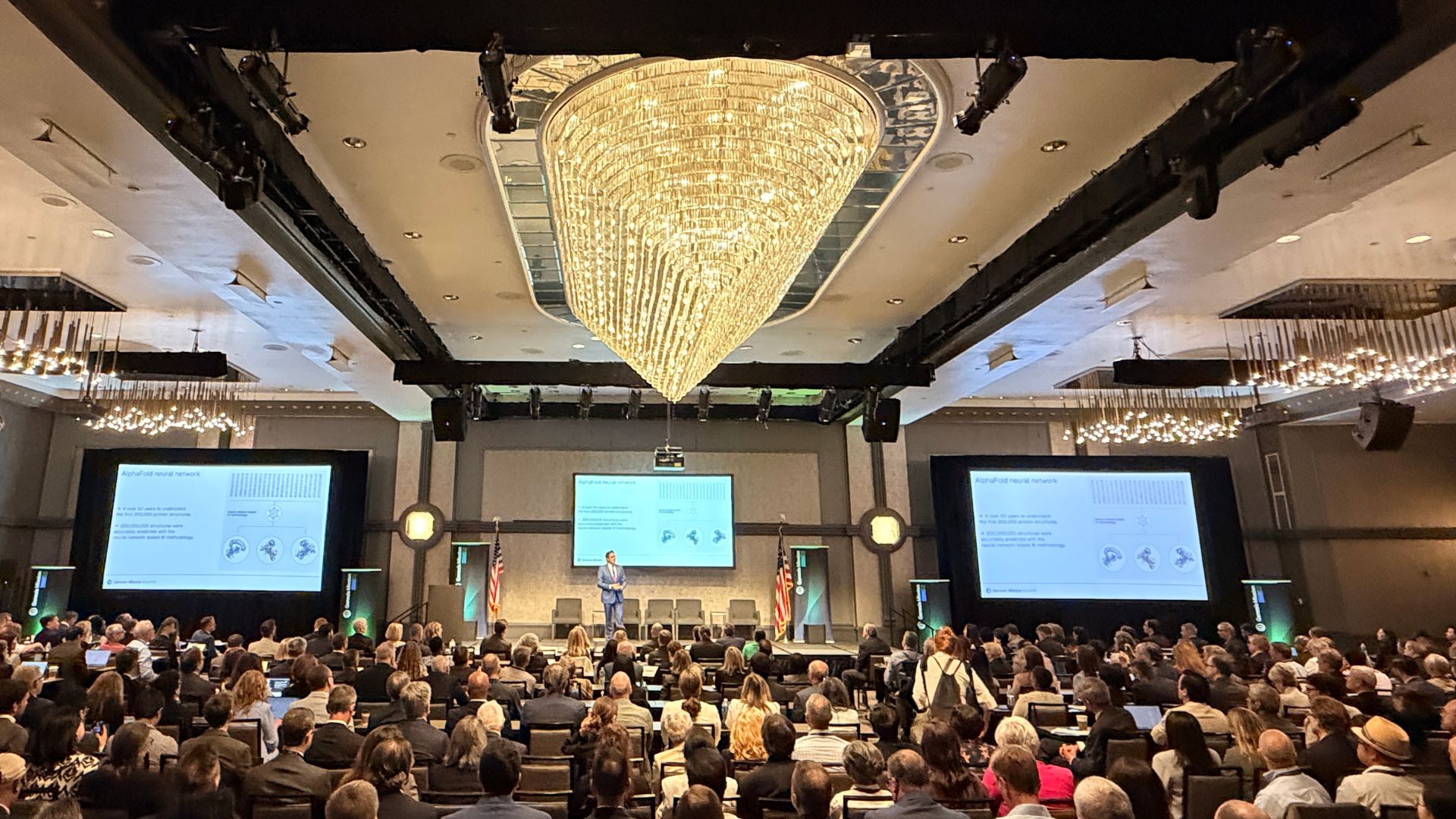
The inaugural Genesis Mission Annual Summit brought together White House and federal science officials, national laboratory leaders, university researchers, technology companies, international partners, members of Congress, and researchers from the first 278 project teams selected under the Genesis Mission.
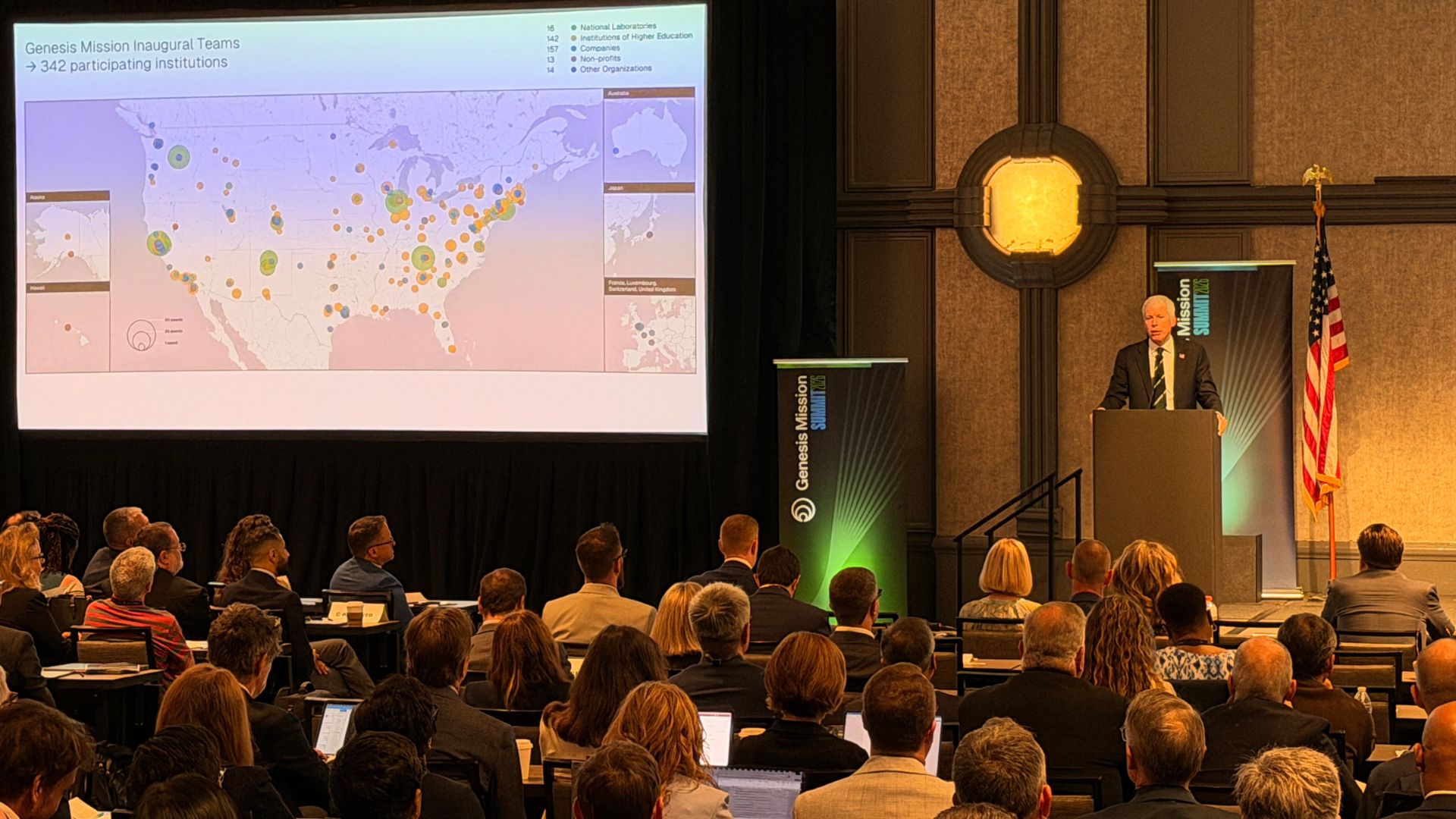
More than 5,000 applications were submitted in the first round. The 278 selected teams involve 342 participating institutions across all 50 states, including national laboratories, universities, companies, nonprofit organizations, and other institutions. The projects represent more than $250 million in potential support and have entered award negotiations with the U.S. Department of Energy (DOE).
The summit offered a view of the people and institutions now participating across the Genesis Mission.
White House and Department of Energy
Michael Kratsios, Director of the White House Office of Science and Technology Policy (OSTP), and Chris Wright, U.S. Secretary of Energy, opened the summit.
Kratsios placed the Genesis Mission within a history of large-scale U.S. science and technology efforts, including the Manhattan Project and the Apollo program.
President Donald Trump launched the Genesis Mission by executive order in November 2025. The White House describes it as a White House-led, whole-of-government initiative, with DOE responsible for building its core scientific infrastructure.
Wright announced the first 278 selected teams. DOE and the national laboratories had mobilized approximately 400 staff members and experts to review more than 5,000 applications.
The selected teams include 87 led by DOE or National Nuclear Security Administration (NNSA) laboratories, 168 led by universities, 19 led by companies, and four led by nonprofit organizations.
Darío Gil, DOE Under Secretary for Science and leader of the Genesis Mission, presented the broader institutional map: 342 participating institutions across all 50 states, including 16 national laboratories, 142 higher-education institutions, 157 companies, 13 nonprofit organizations, and 14 other organizations.
Gil said the Genesis Mission had expanded to 20 federal departments and agencies. White House materials released for the summit described participation from more than 15 federal agencies. The initial 26 national science and technology challenges had also expanded to 33 challenges.
Conner Prochaska, Director of ARPA-E and Director of Partnerships for the Genesis Mission, served as master of ceremonies during the summit.
AI for Science: DOE and the National Laboratories
Gil led the Technical Keynote, which also included four Science Lightning Talks.
Terence Tao, Professor at the University of California, Los Angeles (UCLA) and a Fields Medalist, presented AI applications in mathematical research.
Laurent Chapon, Associate Laboratory Director for Photon Sciences at Argonne National Laboratory (ANL), presented AI applications in advanced X-ray imaging.
Hendrik Hamann, Chief AI Scientist for Innovation, Science and Security at Brookhaven National Laboratory (BNL), discussed AI and foundation models for electric-grid research.
Sivasankaran Rajamanickam, Distinguished Member of the Technical Staff at Sandia National Laboratories (SNL), presented work connecting AI-driven design, advanced manufacturing, and physical testing.
The presentations covered AI applications in mathematics, scientific imaging, the electric grid, and national-security research.
Leadership: NIH, NASA, NSF and the Department of War
Ethan Klein, United States Chief Technology Officer at OSTP, moderated the Leadership Panel with officials from four federal institutions.
Jay Bhattacharya, Director of the National Institutes of Health (NIH) and Performing the Delegable Duties of the Director of the Centers for Disease Control and Prevention (CDC), discussed biomedical research, the time between scientific discovery and patient care, and opportunities for early-career researchers and small businesses.
Jared Isaacman, Administrator of the National Aeronautics and Space Administration (NASA), discussed NASA’s scientific data and the computing requirements associated with space science and exploration.
Brian Stone, Chief of Staff at the U.S. National Science Foundation (NSF), discussed scientific infrastructure, data, computing resources, and new NSF investments connected to AI-enabled research.
Emil Michael, Under Secretary of War for Research and Engineering at the Department of War, discussed national-security research and development, including quantum sensing, positioning, navigation and timing, biotechnology, and critical supply chains.
Japan: The First International Partner
Shigeo Yamada, Ambassador of Japan to the United States, joined Harriet Kung, Deputy Director for Science Programs in DOE’s Office of Science, for a fireside chat on Japan’s participation in the Genesis Mission.
Japan is the first formal international partner of the Genesis Mission. The partnership involves DOE and Japan’s Ministry of Education, Culture, Sports, Science and Technology (MEXT) and Ministry of Economy, Trade and Industry (METI).
Under the framework, the United States and Japan plan to contribute $500 million each over five years, subject to future appropriations. The partnership includes 11 joint science teams involving 12 DOE national laboratories, one DOE Office of Science user facility, and 12 Japanese research institutions.
Yamada discussed the scientific relationships already connecting U.S. and Japanese government agencies, laboratories, universities, and companies.
National Laboratories and Industry
Secretary Wright moderated the Partnership Panel with John Sarrao, Laboratory Director of SLAC National Accelerator Laboratory; Karthik Narain, Chief Product and Business Officer of Google Cloud; and Misha Laskin, Chief Executive Officer of Reflection AI.
Sarrao discussed the scientific facilities, data, and research capabilities of the national laboratories and collaboration with industry.
Narain discussed how a common framework can help companies identify where computing, AI models, and other resources can be used across laboratories, universities, and research teams.
Google announced $40 million in AI tokens and cloud credits for the Genesis Mission, along with access for selected teams to AlphaEvolve, AlphaFold 3, AlphaGenome, WeatherNext, and AlphaEarth Foundations, and Gemini for Government resources for the DOE national laboratory system.
Laskin discussed the use of AI models in scientific research, including roles for open and closed models.
The Genesis Mission Platform
The platform demonstration brought together the Genesis Mission technical team, Oak Ridge National Laboratory (ORNL), and AMD.
Brian Spears, Technical Director for DOE’s Genesis Mission at Lawrence Livermore National Laboratory (LLNL), demonstrated components of the developing platform connecting researchers with AI models, agents, scientific data, and computing resources.
Stephen Streiffer, Laboratory Director of ORNL, introduced Lux, expected to come online in October 2026, and Discovery, expected in 2028 as the successor to Frontier.
Thomas Zacharia, Senior Vice President for Strategic Technology Partnerships and Public Policy at AMD, discussed the computing systems supporting scientific simulation, AI training, inference, and agent-driven research workflows.
The First 278 Project Teams
The afternoon Panel Discussion and Breakout Groups brought researchers from the first 278 selected projects together with members of the Genesis Mission platform and data teams.
The session was moderated by Kathryn Moler, Chodorow Professor at Stanford University.
Participants included Rick Stevens, Associate Laboratory Director for the Computing, Environment and Life Sciences Directorate at Argonne National Laboratory; Brian Spears of LLNL; Andy Schwartz, Deputy Associate Director for Basic Energy Sciences in the DOE Office of Science; Gina Tourassi, Associate Laboratory Director of the Computing and Computational Sciences Directorate at ORNL; and Kelly Rose, Genesis Data Research & Development Lead at DOE.
Researchers discussed AI agents and models, data, federation, and the resources available across the Genesis Mission.
During a press availability at the summit, Stephen Streiffer and Gina Tourassi of ORNL, Steven Cowley, Laboratory Director of Princeton Plasma Physics Laboratory (PPPL), and Johney Green, Laboratory Director of Savannah River National Laboratory (SRNL) and President of Battelle Savannah River Alliance, also discussed their laboratories’ work related to the Genesis Mission.
Congress
Darío Gil moderated the Congressional Perspectives discussion with Mike Lee, U.S. Senator for Utah, and Mark Warner, U.S. Senator for Virginia.
Lee discussed the role of Congress in providing a longer-term foundation for a mission launched through executive action.
“This mission, while created by executive order, needs to be propelled through legislation.”
Warner discussed long-term policy continuity, workforce development, AI, governance, and national security.
Closing Remarks
James Danly, United States Deputy Secretary of Energy, delivered the summit’s closing remarks.
Danly placed the Genesis Mission within a longer history of U.S. science and technology, citing the periods from ENIAC to the first iPhone, from the discovery of the DNA double helix to completion of the Human Genome Project, and from the first powered flight at Kitty Hawk to the Moon landing.
He described the mission’s goals in terms of accelerating scientific and technological discovery and improving human well-being, while also discussing the physical infrastructure and workforce required to support scientific computing and AI.
The inaugural summit brought together the White House and DOE; NIH, NASA, NSF and the Department of War; national laboratories; universities; technology companies; Japan as the first international partner; members of the U.S. Senate; and researchers from the first 278 selected projects across 342 participating institutions.
—
VisibleTogether reported from the inaugural Genesis Mission Annual Summit in Washington, D.C., on July 22, 2026.