[VisibleTogether | July 15, 2026 | Washington, D.C.]
Witnesses outline proposals on IND requirements, overseas inspections and patient access as lawmakers question research funding and FDA staffing
With a growing share of early-stage drug trials starting outside the United States, a clinical research executive told a House panel Wednesday that the main barrier lies less in how fast the Food and Drug Administration reviews applications than in what it takes to prepare one, while a global health scholar urged lawmakers to expand FDA’s capacity to inspect trial sites abroad.
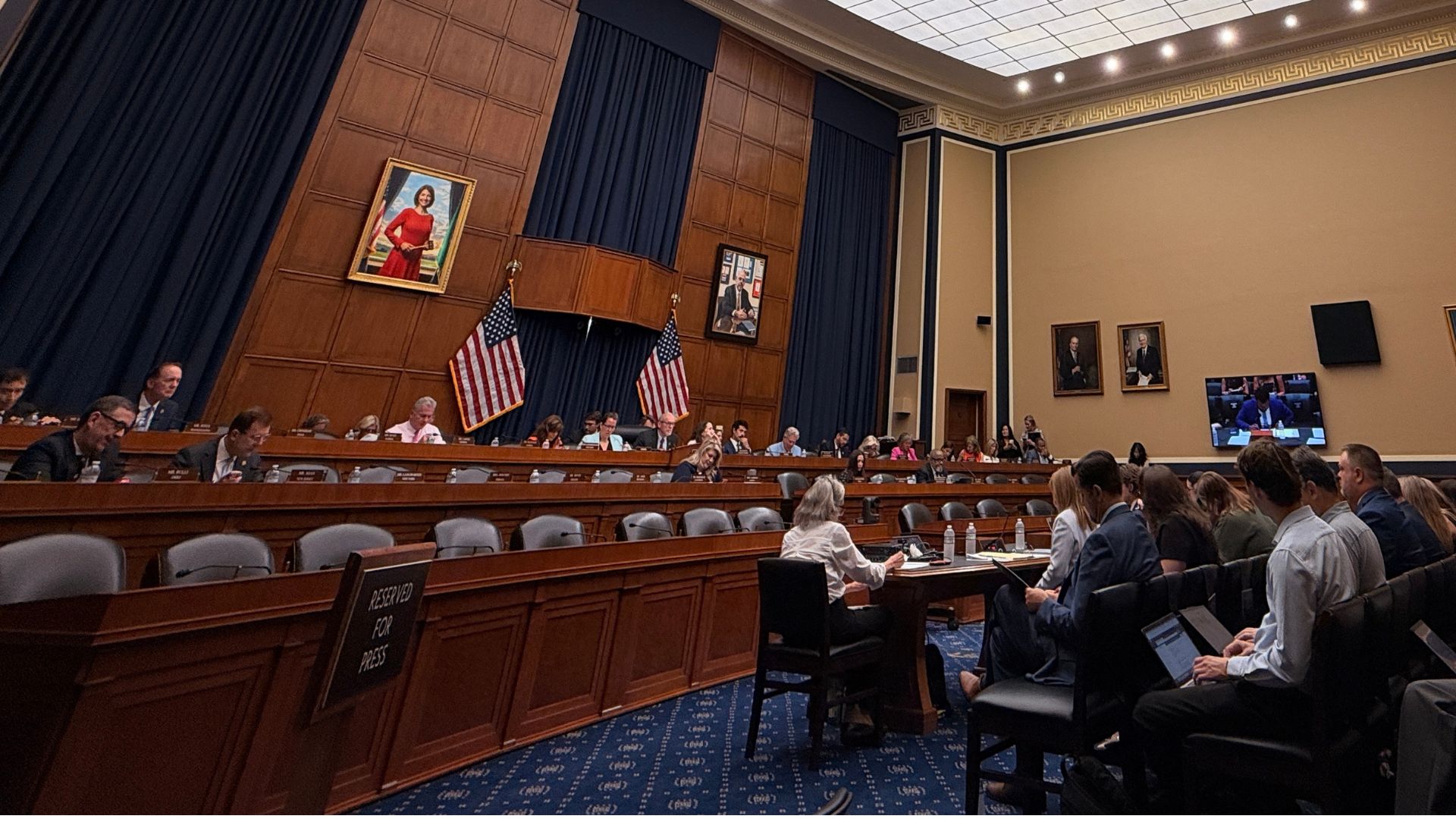
The House Energy and Commerce Subcommittee on Health held the hearing as Congress prepares to reauthorize the FDA’s user fee programs, which fund much of the agency’s drug review work. Subcommittee Chairman Morgan Griffith (R-Va.) said reauthorization “is not limited to just extending the status quo,” and that Congress could use it to streamline regulatory processes and reduce administrative burden.
Preparation, not review time
Cynthia Verst, president of design and delivery innovation in IQVIA’s R&D Solutions unit, testified that China’s share of Phase 1 country trial starts passed the U.S. share in 2021. In 2025, she said, China accounted for 35% and the United States 27%.
The growth, Verst said, is driven by Chinese-headquartered companies running trials at home: 89% of Phase 1 trial country uses by Chinese companies in 2025 were in China, compared with about 5% each for U.S.- and EU-headquartered companies. Some U.S.-headquartered sponsors start early trials in China, she said, “but even more so in Australia,” for cost and speed advantages.
“It is not the FDA review timelines, but rather the IND package preparation that drives ex-US first-in-human starts,” Verst said. She urged Congress to encourage minimum data sets fit for first-in-human trials, scaled to complexity and risk, and to expand FDA’s capacity for scientific advice as products advance. Without that support, she said, the U.S. might gain more first-in-human trials but see costly rework later.
Susan Winckler, chief executive of the Reagan-Udall Foundation for the FDA and FDA chief of staff from 2007 to 2009, said recommendations from the foundation’s stakeholder convenings align with Operation TrialBlazer, the department-wide clinical research initiative HHS launched in June. The most frequently cited need, she said, was clear, phase-appropriate requirements and more opportunities to interact with FDA.
She offered one example: when FDA pauses an investigational new drug application before anyone has been dosed, the agency calls it a “clinical hold,” which she said can lead people to think clinical work has stopped. A “notice of additional information required,” she said, would be clearer and less alarming to patients and investors.
Checking data from abroad
Thomas Bollyky, director of the Global Health Program at the Council on Foreign Relations, testified that China offers first-in-human trial pathways three to five times faster than the U.S. IND process, at one-third to one-half the cost. His written testimony traced the shift in part to a decade of Chinese regulatory reforms and said China “has become genuinely innovative in expediting biopharmaceutical development.”
He said FDA cannot effectively oversee the level of clinical trial activity now occurring in China. Citing a recent study, he said 20 of 2,732 eligible FDA Good Clinical Practice inspections between January 2016 and July 2023 took place in China, and about 93% in the United States. He proposed a user fee on IND submissions that include foreign clinical data, to fund more inspections.
Thomas Hwang, who directs the Cancer Innovation and Regulation Initiative at Brigham and Women’s Hospital and Harvard Medical School and said his views were his own, presented research on the early-stage trials behind FDA-approved cancer drugs. According to the preliminary findings in his written testimony, approvals from 2018 and 2019 involved no first-in-human study sites in China. Between 2018–2021 and 2022–2025, the share of early-stage trials with any Chinese site rose from 5% to 13%, while the share of first-in-human studies with at least one U.S. site fell from 98% to 88%.
“We should welcome competition in the global research enterprise. But such competition has to be fair, transparent, and ethically sound,” Hwang said. He urged Congress to give statutory backing to FDA’s initiative to publish why drugs are not approved, and to extend it to the reasons early-stage trials are halted. He also suggested requiring that a minimum share of non-U.S. trial sites undergo FDA inspection, and piloting coordinated review of trial applications with international partners.
Winckler cautioned that a statutory inspection requirement without an assessment of the resources needed would be “logically unlikely to be met.”
Bringing trials closer to patients
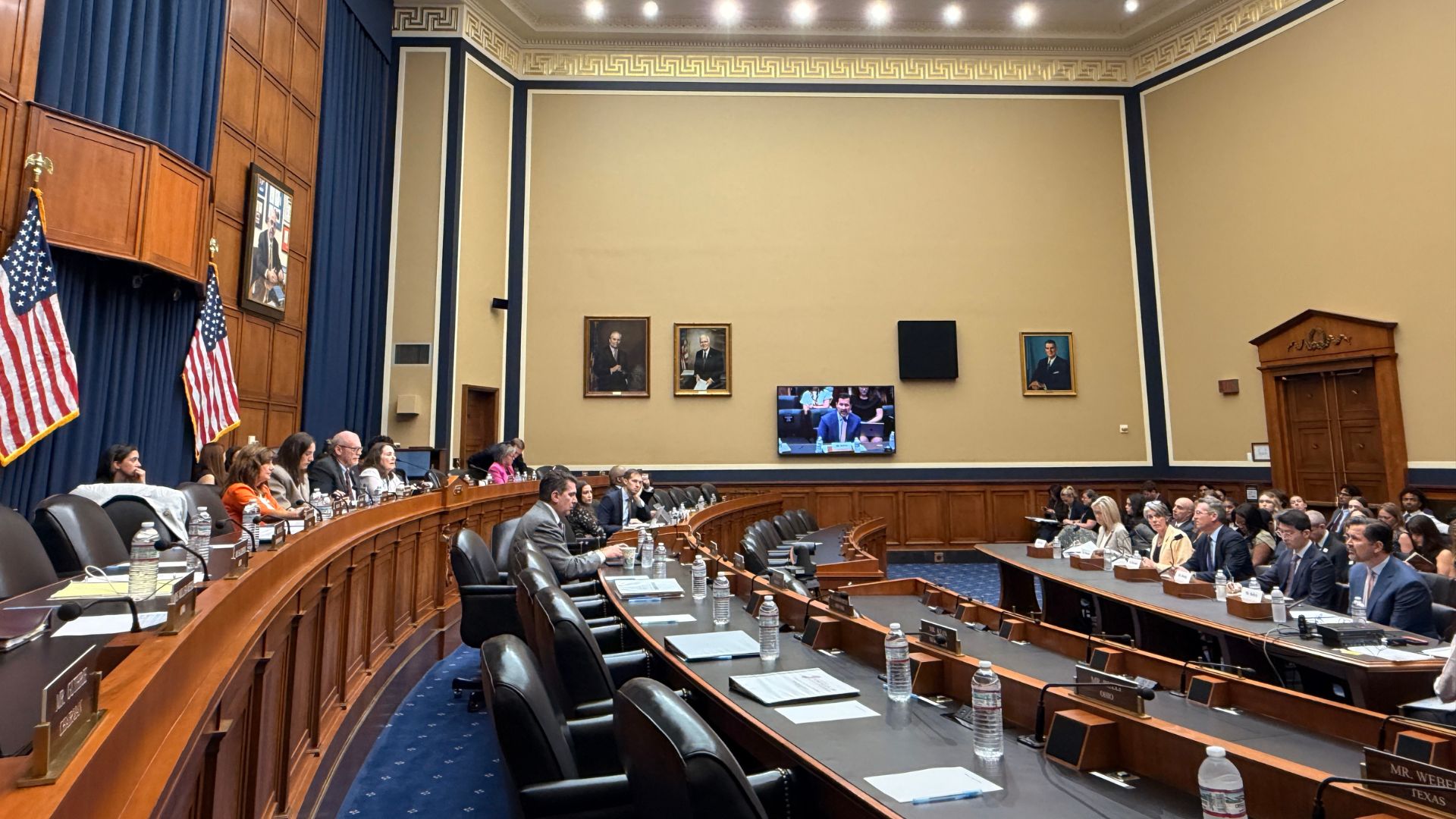
Several members focused on who can take part in trials. Griffith said some constituents in his district live closer to Cleveland than to Charlottesville, and asked how to bring community health centers into research. Winckler pointed to hub-and-spoke models, in which a central research site carries much of the oversight burden while local clinicians enroll and follow patients.
Rep. Raul Ruiz (D-Calif.), an emergency physician, cited the Clinical Trial Modernization Act (H.R. 3521), which he introduced with Rep. August Pfluger (R-Texas) to ease patients’ costs of taking part in trials. Rep. Buddy Carter (R-Ga.), a pharmacist, said pharmacies could help decentralize trials. Rep. Jake Auchincloss (D-Mass.) said only about 5% to 7% of eligible U.S. patients are enrolled in trials at any given time.
Aaron Kowalski, chief executive of Breakthrough T1D, who has type 1 diabetes, said deceased-donor islet cells, transplanted abroad for decades, remain largely inaccessible for research and transplantation in the U.S. because FDA regulates them as drugs rather than organs. His written testimony said FDA’s recent approval of Tzield relied on C-peptide for the first time, but that the agency’s broader framework for evaluating the marker “has not fully caught up with the science.”
Cell therapies are already producing insulin independence, Kowalski said, and one pivotal trial is under way in the U.S. “With the right approach, we can be the first country to approve and manufacture scalable cures for T1D,” he said.
Asked by Rep. John Joyce (R-Pa.) about early screening, Kowalski said roughly half of unscreened patients are diagnosed in diabetic ketoacidosis, compared with less than 4% of those screened. Joyce cited the SCREEN for Type 1 Diabetes Act, which Rep. Kim Schrier (D-Wash.) introduced with him and other members.
Funding and staffing
Full committee Chairman Brett Guthrie (R-Ky.) said the U.S. has set the gold standard for developing safe and effective medical products, and that other countries are investing heavily to attract biotech companies and trials.
Ranking Member Diana DeGette (D-Colo.) said Department of Government Efficiency actions early last year resulted in 3,500 jobs being eliminated at FDA, the most of any HHS agency, and criticized several decisions made under former Commissioner Martin Makary. She said Acting Commissioner Kyle Diamantas has shown every indication that he will empower career experts. Full committee Ranking Member Frank Pallone Jr. (D-N.J.) said he had asked the Government Accountability Office whether FDA violated the law by spending user fee money on unauthorized expenditures.
Bollyky testified that staffing at FDA’s Center for Drug Evaluation and Research and Center for Biologics Evaluation and Research remained 18% and 16% below the start of fiscal 2025. Several members and witnesses also raised an Office of Management and Budget proposal, whose public comment period closed two days before the hearing, that would require senior political appointees to review discretionary federal grants before they are awarded. Kowalski said Breakthrough T1D had joined a coalition letter asking that the proposal be withdrawn. Rep. Lori Trahan (D-Mass.) entered into the record a June 30 response from the OMB director to a letter she led.
Members have until July 29 to submit written questions to the witnesses. The current prescription drug user fee authorization expires Sept. 30, 2027.
Data note: IQVIA’s initial written testimony reported China’s 2025 share at 31%, compared with 27% for the United States. An updated version in the House committee repository reported 35% for China, with the U.S. figure unchanged. Verst also cited 35% during the hearing.