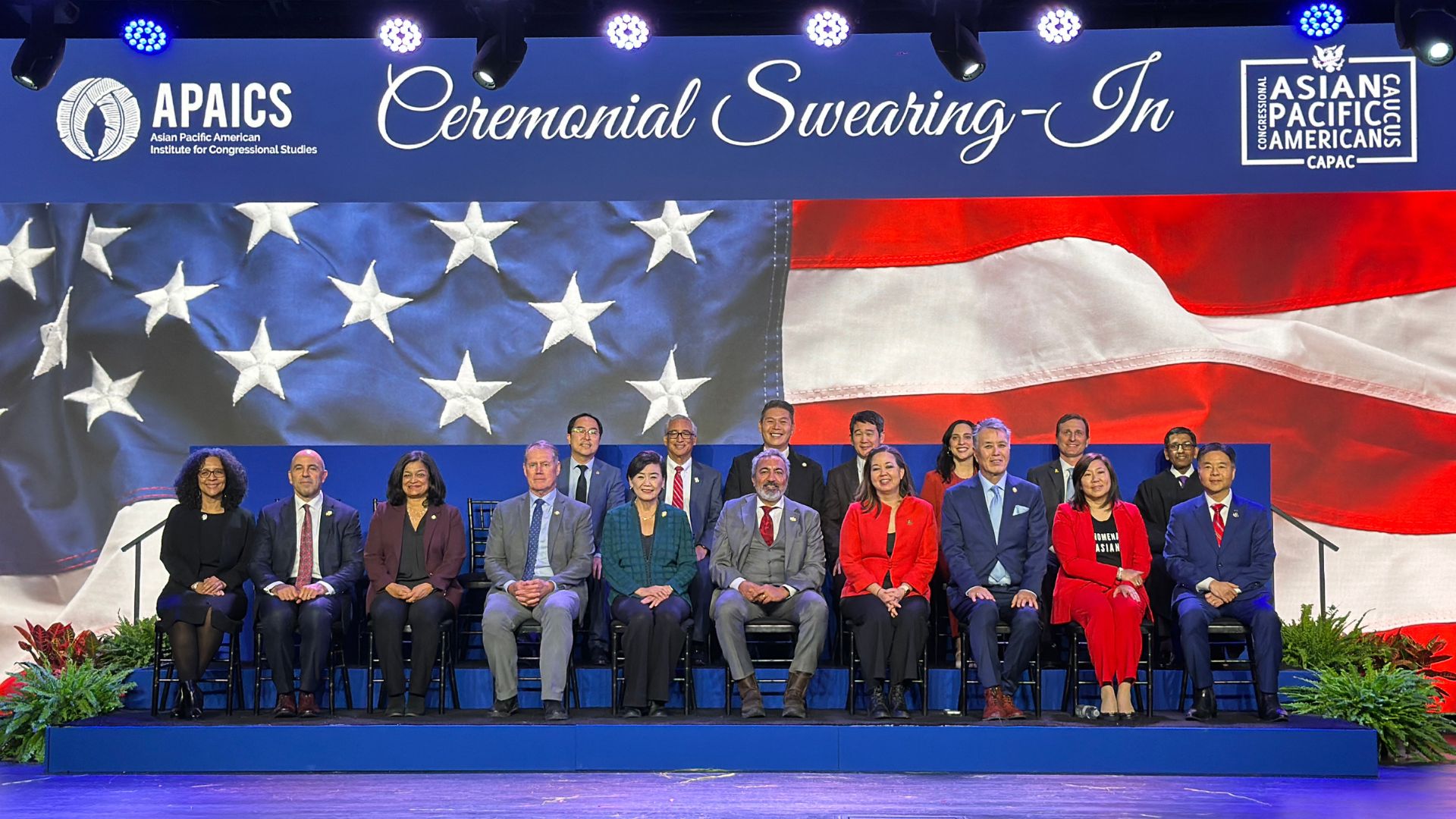
[VT | July 21, 2026 | Washington, D.C.]
U.S. Representative Grace Meng of New York, chair of the Congressional Asian Pacific American Caucus, issued a statement in support of H.R. 1589, the American Dream and Promise Act of 2025, during a congressional press conference.
The legislation would establish a pathway to permanent residency for certain undocumented immigrants who arrived in the United States as children, as well as eligible holders of Temporary Protected Status and individuals covered by Deferred Enforced Departure.
Meng is an original cosponsor of the bill and has signed a discharge petition seeking to bring the legislation before the full House of Representatives.
According to Meng, the groups potentially affected by the legislation include approximately 430,000 Dreamers from Asian countries, including India, China, South Korea, and the Philippines. She also cited more than 10,000 Temporary Protected Status holders from Myanmar and Nepal.
What the legislation would do
The American Dream and Promise Act would create a process through which eligible individuals could apply for lawful permanent resident status.
The bill covers several categories of immigrants whose current protections do not, by themselves, provide a direct path to a green card.
Dreamers are generally understood to be people who entered the United States as children and have lived in the country for much of their lives without permanent legal immigration status.
Some Dreamers have received temporary protection through Deferred Action for Childhood Arrivals, commonly known as DACA. The program may provide protection from deportation and authorization to work, but it does not provide permanent residency or citizenship.
The legislation would also apply to certain people with Temporary Protected Status, or TPS. TPS allows eligible nationals of designated countries to remain and work in the United States when conditions in their home countries make return unsafe. These conditions may include armed conflict, environmental disasters, or other extraordinary circumstances.
Deferred Enforced Departure, or DED, provides another form of temporary protection from removal. Unlike TPS, which is established under federal immigration law, DED is generally based on presidential authority.
Both TPS and DED are temporary protections and do not automatically lead to permanent legal status.
What is CAPAC?
The Congressional Asian Pacific American Caucus is a group of members of Congress focused on public policy affecting Asian American, Native Hawaiian, and Pacific Islander communities.
Congressional caucuses bring lawmakers together around shared policy areas, communities, or regional interests. They may coordinate legislative priorities, issue public statements, organize briefings, and support bills introduced in Congress.
As chair of CAPAC, Meng speaks in both her capacity as a member of Congress and as the leader of a caucus representing lawmakers engaged with Asian American and Pacific Islander policy issues.
The role of a discharge petition
The American Dream and Promise Act has also become part of a procedural effort in the House of Representatives.
A discharge petition allows members of the House to attempt to bring a bill to the floor without waiting for the committee or House leadership that would normally control its consideration.
A petition requires the signatures of 218 representatives, a majority of the full House, before it can move forward under the discharge process.
Reaching that threshold does not pass the bill. It creates a possible route for the House to debate and vote on the legislation.
For the proposal to become federal law, it would still need to pass both the House and the Senate in identical form and then be signed by the president.
The legislation remains under consideration in Congress.