Understanding the Nonprofit Security Grant process, the Egrants system, and the reimbursement model
[VT | March 10, 2026 | Philadelphia PA]
In recent years, the U.S. government has introduced several funding programs designed to help community institutions strengthen safety and security. One of the most important among them is the Nonprofit Security Grant Program (NSGP), which provides funding for nonprofit organizations to improve physical security and preparedness.
The program is intended to support institutions such as religious organizations, community centers, cultural groups, and other nonprofit entities that provide public services.
However, in practice many immigrant-serving nonprofit organizations rarely participate in these programs.
For many Chinese community organizations, the challenge is not necessarily eligibility. Instead, the barriers often include limited access to information, unfamiliarity with government systems, complex application procedures, and the administrative requirements involved in managing grant-funded projects.
As a result, public resources that could benefit the community are sometimes underutilized.
Last year, ChineseinUS assisted a Chinese nonprofit organization in Northeast Philadelphia in successfully applying for a Pennsylvania state security grant. The project has now entered its implementation stage.
Using this case as an example, this article explains how the program works, what the application process looks like, and what challenges nonprofit organizations may encounter after receiving approval.
What Is the Nonprofit Security Grant Program?
The Nonprofit Security Grant Program (NSGP) is a federal initiative funded by the Federal Emergency Management Agency (FEMA). Funding is distributed to eligible nonprofit organizations through state-level administrative agencies.
In Pennsylvania, the program is typically administered by the Pennsylvania Commission on Crime and Delinquency (PCCD) and related state agencies.
The funding is intended to help nonprofit organizations improve security infrastructure and preparedness, including:
- Security planning
- Surveillance and access control systems
- Physical security upgrades
- Security training and exercises
Unlike many operational grants, the NSGP is risk-based. Applications are evaluated primarily on whether the organization faces identifiable security risks and whether the proposed investments effectively address those risks.
As a result, several key elements are central to the application process:
- Risk assessments
- Vulnerability assessments
- Investment justification explaining how proposed security measures reduce risk
Why an Approval Email Does Not Mean Funding Is Secured
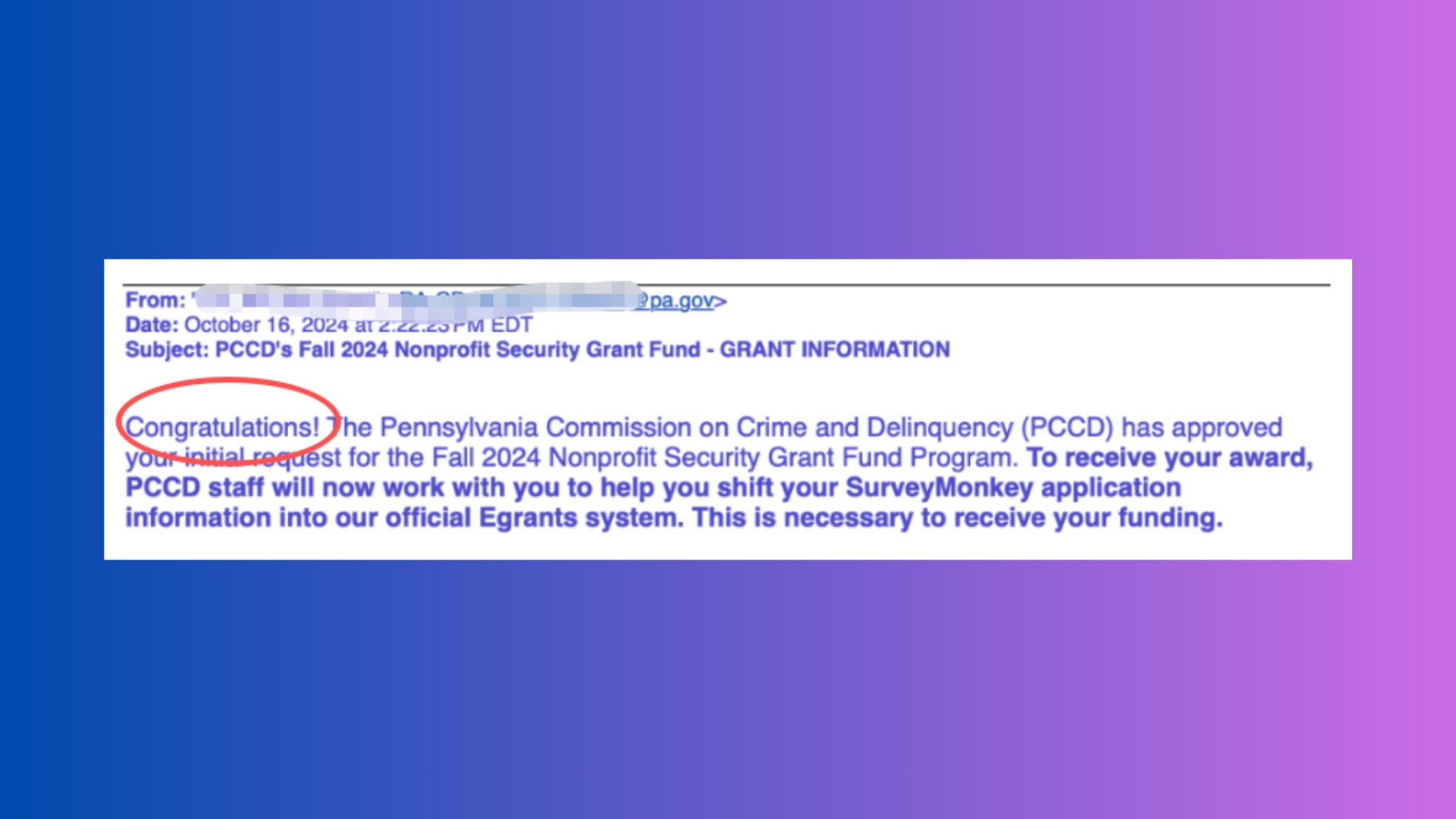
Based on ChineseinUS’s experience assisting community organizations with grant applications, many funding programs treat a “Congratulations” email as confirmation that the grant has been awarded.
However, the process works differently in Pennsylvania’s nonprofit security grant program.
In many cases, the approval email simply indicates that the application has passed the initial review stage.
Organizations must still complete additional steps before the project can officially move forward.
In this case, the applicant organization was required to transfer its application information into Pennsylvania’s official electronic grant management platform, where the project details had to be entered again and additional documentation submitted.
Only after these steps are completed and reviewed can the project formally enter the award stage.
The Role of the State’s Electronic Grant System
After receiving initial approval, nonprofit organizations must complete a series of administrative steps through the state’s electronic grant management system.
These typically include:
- Registering the organization in the state system
- Assigning project management roles
- Entering project information
- Submitting detailed budget documentation
- Completing compliance and certification forms
The system organizes the application into multiple sections, such as:
- Project summary
- Budget details
- Procurement information
- Financial accountability statements
- Nonprofit compliance checklists
Only after all sections are completed and approved does the project move forward to the formal funding award stage.
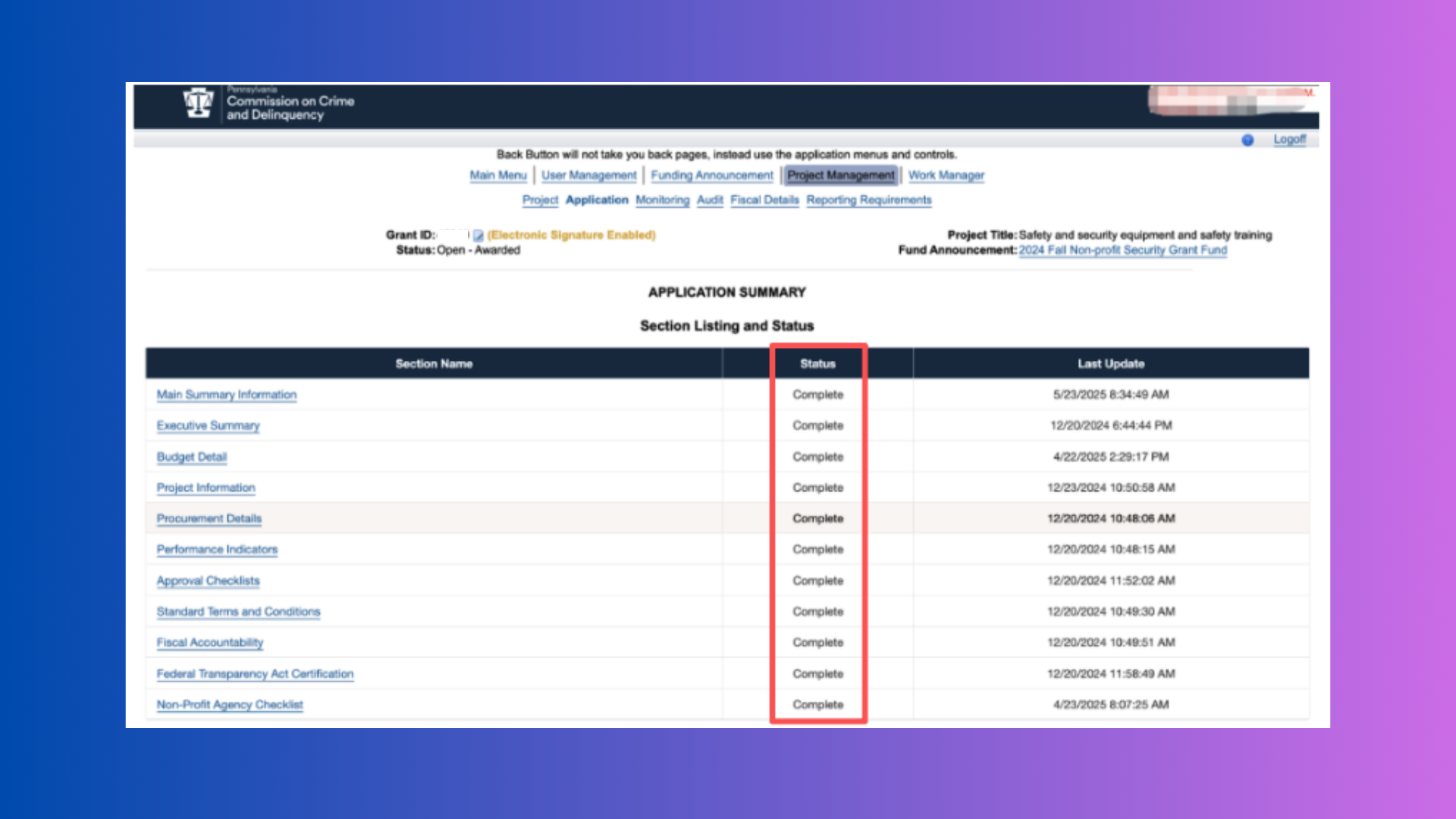
In this case, the application materials were organized and submitted with the assistance of ChineseinUS. The system records show that all required sections were completed and approved.
The Reimbursement Model: A Commonly Overlooked Challenge
One important aspect of this type of funding is that the program typically operates under a reimbursement model.
This means that nonprofit organizations must first pay for eligible project expenses themselves.
Afterward, they must submit financial documentation and project progress reports to the state agency. Once the reports are reviewed and approved, reimbursement funds are issued.
For many smaller community organizations, this requirement can be a significant barrier.
Even when a project has been approved, organizations must have sufficient financial capacity to cover initial costs before reimbursement occurs.
In practice, this means that grant approval does not always guarantee project implementation.
How ChineseinUS Assisted in the Application Process
In this case, ChineseinUS primarily assisted the organization during the early stages of the grant process, including project evaluation and application preparation.
Before drafting the application, it was necessary to determine whether the organization’s proposed project aligned with the objectives of the funding program.
To help with this assessment, ChineseinUS provided a simplified information questionnaire covering areas such as:
- Organizational background
- Organizational structure
- Previous community activities
- Proposed project details
- Project timeline
- Preliminary budget estimates
After reviewing this information, further discussions helped determine whether the project was suitable for the funding program.
Many grant applications fail not because the application materials are poorly written, but because the proposed project does not align with the funding program’s priorities.
Once the project alignment was confirmed, the application preparation stage included:
- Completing application forms
- Drafting project descriptions
- Organizing supporting documentation
- Coordinating submission of required materials
Supporting documents typically include nonprofit eligibility documentation, financial records, organizational bylaws, risk assessments, and mission statements.
These materials often require multiple rounds of review and revision before submission.
The Role of Media Visibility
Another factor that can indirectly support nonprofit organizations is public visibility.
In many government funding applications, formal documents mainly describe organizational structure, budgets, and project design.
However, for immigrant-serving community organizations, long-term community impact and public service activities may not always be fully reflected in application documents.
In such cases, media coverage can serve as a supplementary public record that helps demonstrate the organization’s role within the community.
As a Chinese-language media platform that regularly reports on public affairs in Pennsylvania, ChineseinUS has documented numerous community activities and initiatives over the years.
While media coverage cannot replace formal application materials, it can help increase the visibility of community organizations and provide additional context about their work.
For many organizations serving immigrant communities, being visible to the broader public is itself part of a gradual process of recognition.
Common Misunderstandings About the Program
This case also highlights several common misconceptions about government grant programs.
First, nonprofit organizations typically do not apply directly to federal agencies for this program. Instead, funding flows from the federal government to state agencies, which then distribute funds to eligible nonprofit organizations.
Second, the investment justification is often the most important part of the application. This section must clearly explain the relationship between identified risks, existing vulnerabilities, proposed solutions, and the expected security improvements.
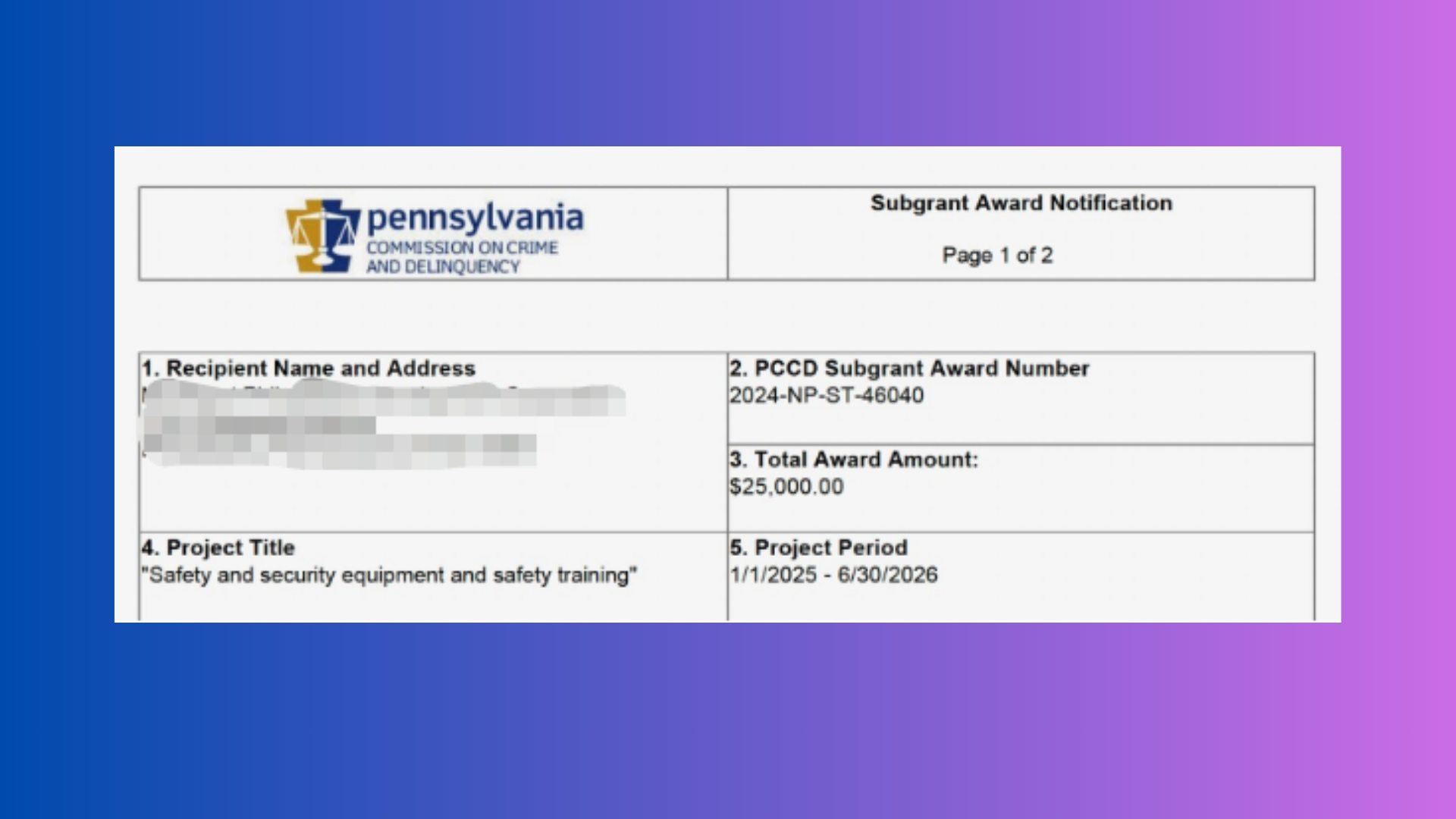
Third, the $25,000 funding level in this program primarily affects procurement and administrative procedures rather than requiring matching funds.
In other words, the amount influences process requirements rather than cost-sharing obligations.
Why This Case Matters
The significance of this case goes beyond a single grant award.
More importantly, it illustrates the full process involved in accessing public funding — from identifying a suitable program, preparing application materials, navigating administrative systems, and meeting compliance requirements after approval.
For many community organizations, the biggest obstacle to accessing public funding is not eligibility, but familiarity with the process.
By documenting real cases like this, community organizations can gain a clearer understanding of how government funding programs operate and how they may participate in the future.
Editor’s Note
This article is based on a real case involving a Chinese community nonprofit organization in Philadelphia. The information presented here reflects practical experience from the application and project implementation process, as well as publicly available government program documentation.
Because grant program requirements may change from year to year, this article is intended for informational purposes only and should not be considered official application guidance.
ChineseinUS published this case study in the hope that sharing practical experience can help more community organizations understand how public funding systems operate and how they may access available resources.