[VT | March 24, 2026 | Philadelphia PA]
Following the latest round of China–U.S. economic and trade consultations held in Paris, Beijing has conducted a series of meetings with foreign-invested companies and U.S. business representatives over three consecutive days, focusing on trade relations and the operating environment for foreign firms in China.
The China–U.S. consultations took place on March 15–16 in Paris, where both sides discussed tariff arrangements, bilateral trade, and investment issues. After the talks, both sides stated that communication would continue. According to Reuters, sources familiar with the discussions said the two sides also explored the possibility of establishing regular communication mechanisms, including a trade committee and an investment committee. These proposals have not been officially confirmed by Chinese authorities. Similar channels, such as commercial working groups and vice-ministerial dialogues, have been in place since 2023.
Following the Paris meetings, Chinese authorities began engaging with foreign businesses in Beijing.
On March 21, Vice Premier He Lifeng met with executives from more than 10 multinational companies at Diaoyutai State Guesthouse. Participating firms included HSBC, UBS, Louis Dreyfus, Schneider Electric, Siemens Healthineers, Rio Tinto, Prudential, Investor AB, Standard Chartered, Suzano, and Tsinghua Unigroup. Discussions covered business operations in China and market cooperation.
On March 22, He Lifeng met with a delegation from the U.S.-China Business Council (USCBC). USCBC Board Chair Rajesh Subramaniam and President Sean Stein attended the meeting. According to official releases, the list of participating companies was not disclosed.
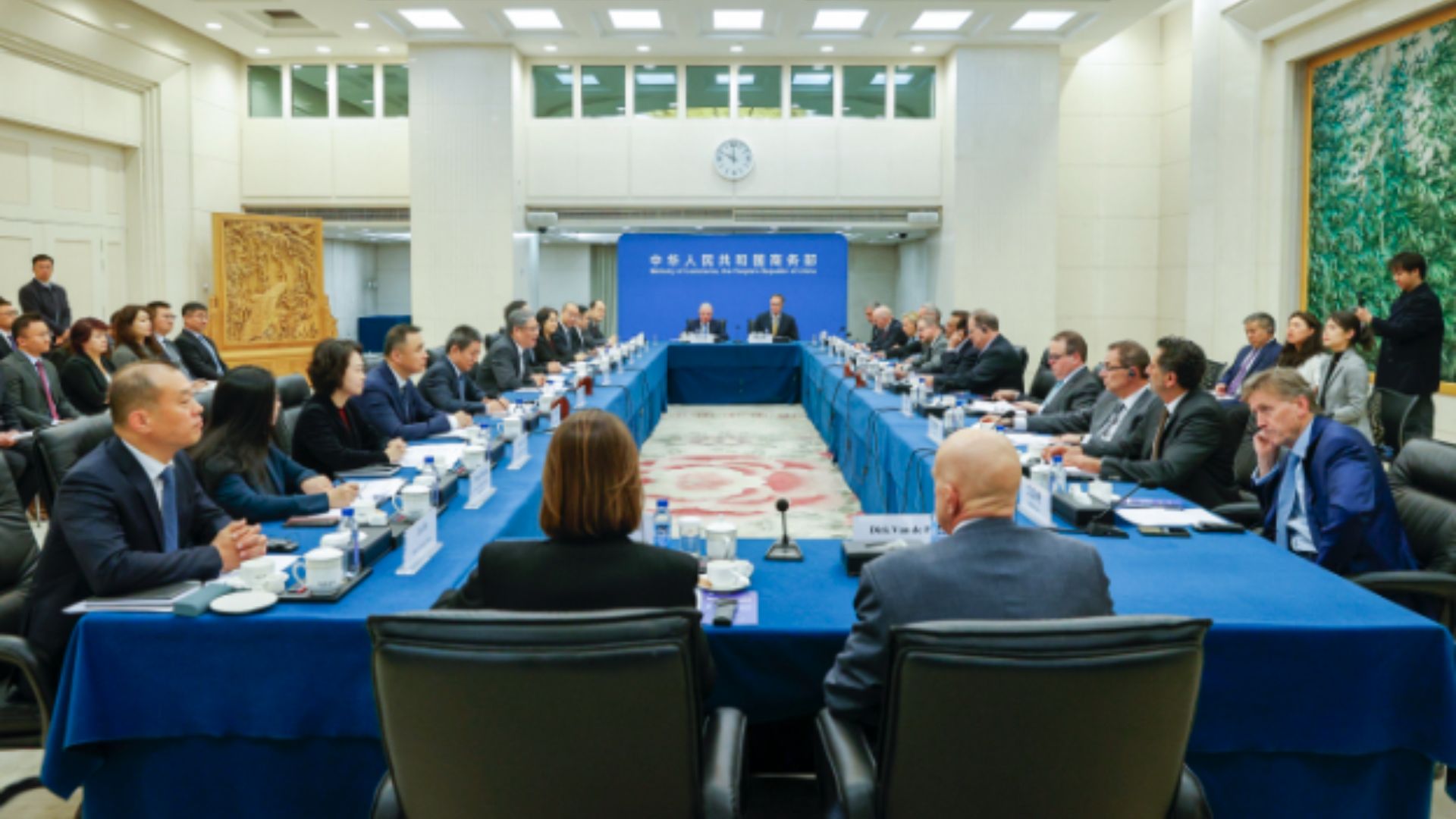
On March 23, China’s Minister of Commerce Wang Wentao met with member companies of the USCBC. The delegation was again led by Rajesh Subramaniam and Sean Stein, with Vice Minister Li Chenggang also in attendance. The meeting focused on China–U.S. economic relations, the business environment for U.S. firms in China, and related policy issues.
During the meeting, Wang reiterated that economic and trade relations should serve as a “stabilizer” in China–U.S. relations and stated that China will continue to expand high-level opening and improve the business environment for foreign investment. U.S. business representatives indicated continued interest in the Chinese market and ongoing operations in China.
In recent years, meetings between Chinese officials and foreign businesses in Beijing have often followed major China–U.S. engagements or international events. From 2020 to 2022, such meetings were more limited and typically involved individual companies. Since 2023, as bilateral communication resumed, the frequency of these engagements has increased. Similar patterns of concentrated meetings were observed around the APEC meetings in 2024.
A comparison of recent meeting patterns is outlined below:
| Year | Trigger Context | Meeting Format | Chinese Officials | Multinational Companies | Institutions |
|---|---|---|---|---|---|
| 2026 | Paris economic talks | Consecutive meetings (Mar 21–23) | He Lifeng, Wang Wentao | HSBC, UBS, Siemens Healthineers, Rio Tinto, Prudential, Standard Chartered, etc. | USCBC |
| 2024 | APEC-related engagements | Multiple concentrated meetings (Beijing) | Xi Jinping, others | Blackstone, Qualcomm, FedEx, etc. | National Committee on U.S.-China Relations (NCUSCR), others |
| 2023 | Resumption of bilateral engagement | Phased meetings | Xi Jinping, State Council officials | Multinational companies | USCBC, NCUSCR, American Chamber of Commerce, European Chamber |
| 2020–2022 | Pandemic and bilateral tensions | Dispersed meetings (individual companies) | Ministry of Commerce, local governments | Individual multinational firms | — |