[VT I Maryland, December 3, 2025 ] The Food and Drug Administration held a public meeting Wednesday to open the reauthorization of the Biosimilar User Fee Amendments (BsUFA) for fiscal years 2028 through 2032. The meeting launched public comment and consultation with industry, with discussion to center on development guidance, regulatory review and related program arrangements for biosimilars over the five-year cycle. Jonathan Collins of FDA’s Center for Drug Evaluation and Research (CDER) moderated.
BsUFA was first enacted in 2012 as part of the Food and Drug Administration Safety and Innovation Act (FDASIA). It authorizes FDA to collect user fees from biosimilar sponsors to support the review of their applications. It is distinct from the Biologics Price Competition and Innovation Act (BPCIA) of 2009, which created the abbreviated approval pathway for biosimilars: BPCIA governs how biosimilars are approved, while BsUFA helps fund the review work.
Program record: $56 billion in savings, 78 approvals
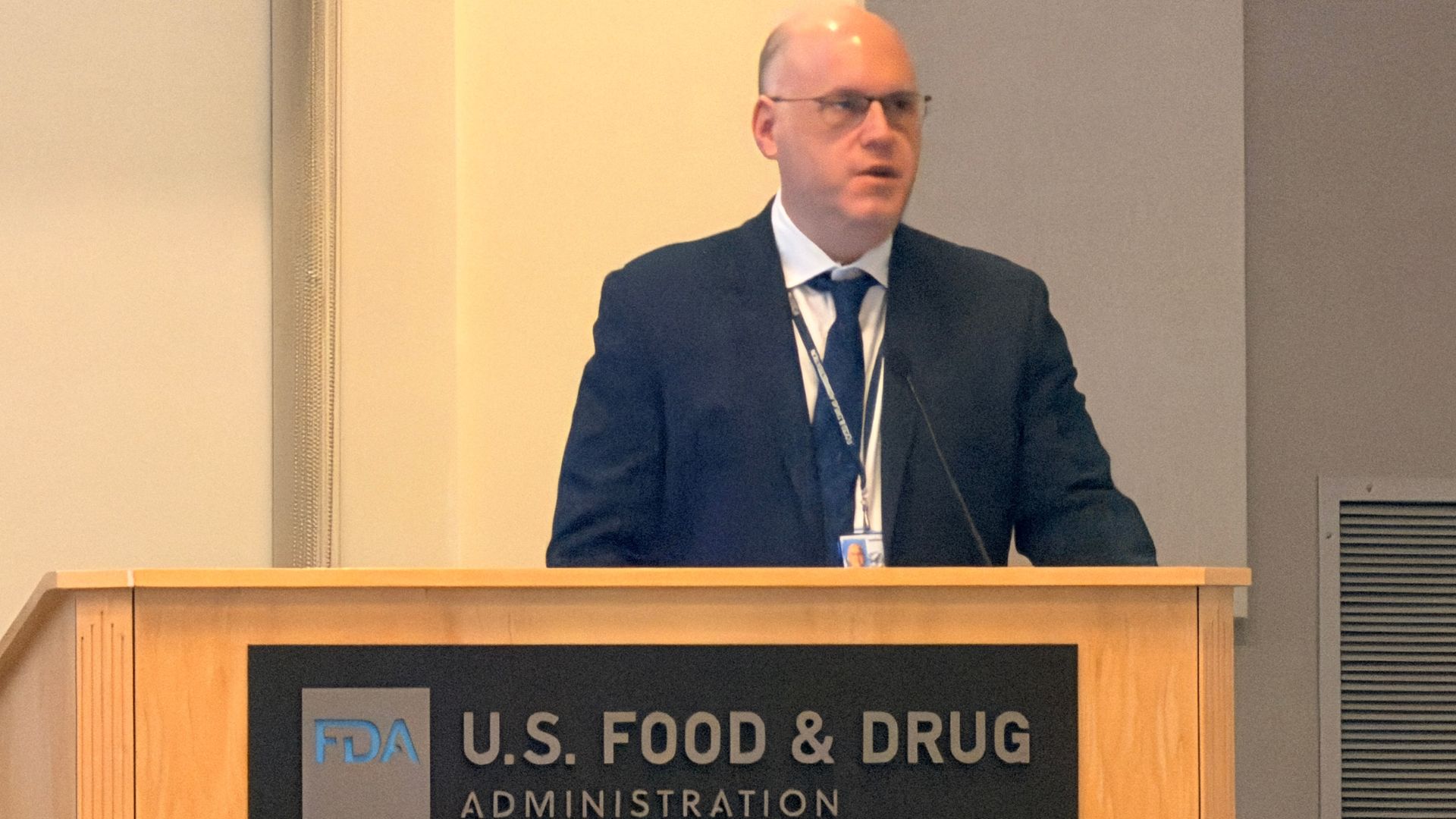
Mike Davis, deputy director of CDER, said in opening remarks that since its start in 2012, BsUFA has helped expand access to biosimilars, improve review efficiency and safeguard drug safety. Biosimilars have saved the U.S. health care system about $56 billion since 2015, he said, including about $20 billion in 2024.
As of the meeting, FDA had approved 78 biosimilars, Davis said. BsUFA provides funding and performance commitments for FDA’s review of biosimilar applications, contributing to a predictable, stable review process and more affordable biologic options for patients.
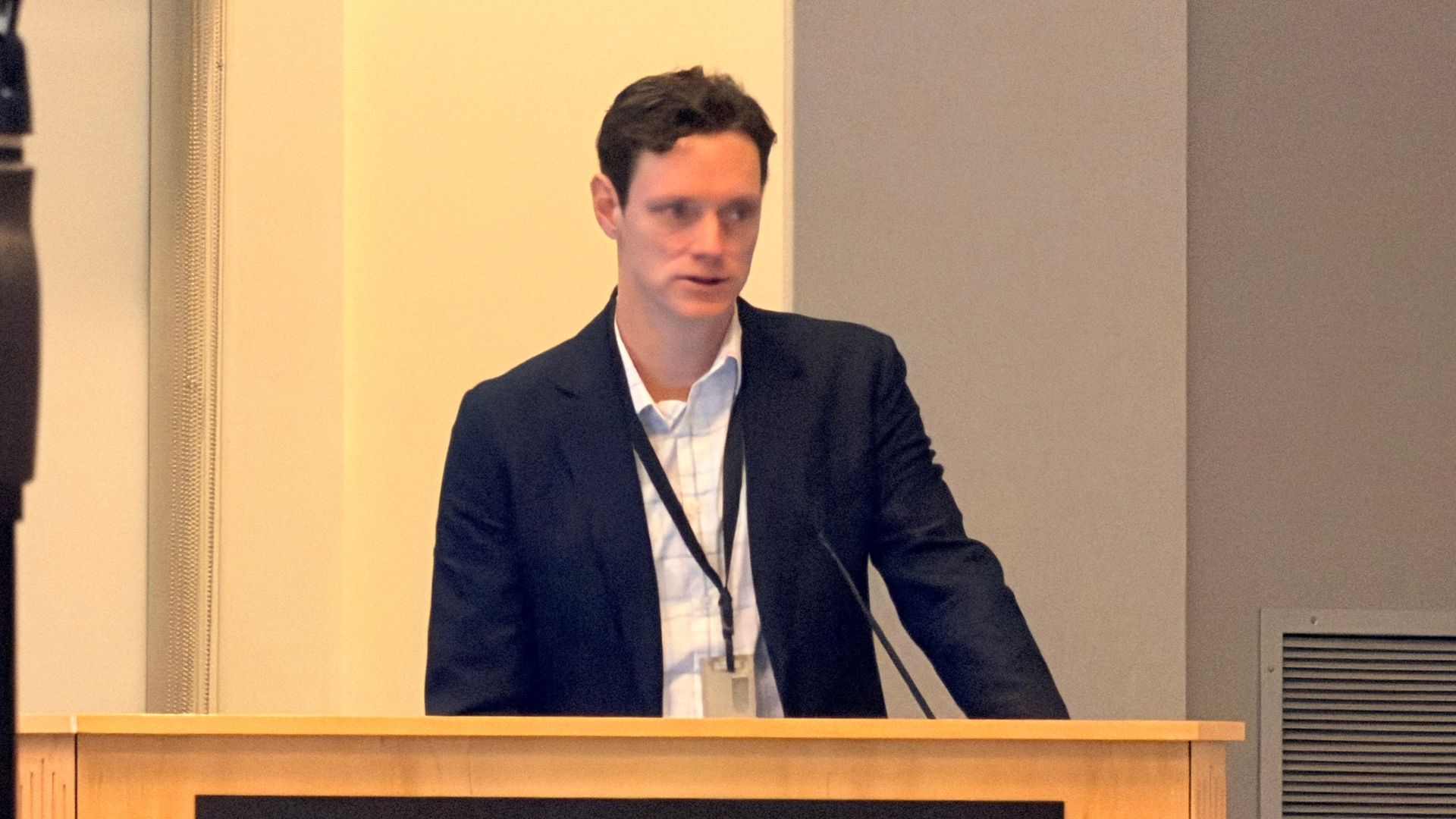
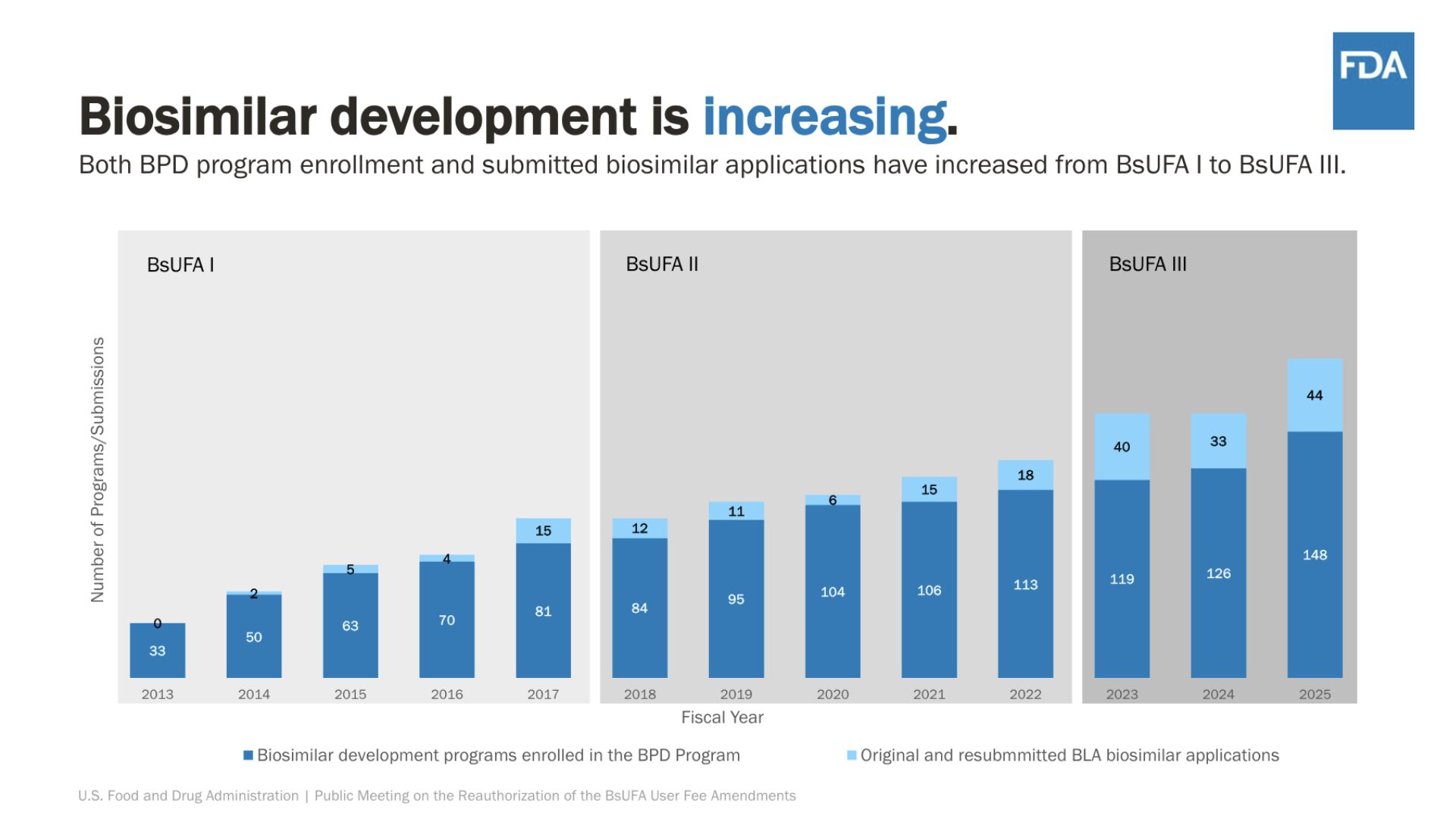
Andrew Kish, director of CDER’s Office of Program and Strategic Analysis, outlined the program’s three cycles:
- BsUFA I established the user fee structure and initial review processes, modeled on the Prescription Drug User Fee Act (PDUFA).
- BsUFA II refined the fee structure, added review commitments and improved efficiency.
- BsUFA III further strengthened commitments on supplement review, regulatory communication, facility inspections and regulatory science, supporting the development and review of biosimilars and interchangeable biosimilars.
In fiscal 2024, Kish said, user fees accounted for 61% of total BsUFA program obligations, with the remainder funded through non-user-fee appropriations. He said performance under BsUFA III has been stable, with improvements in review efficiency, meeting management and data transparency.
Industry priorities: review timelines, communication and stable funding
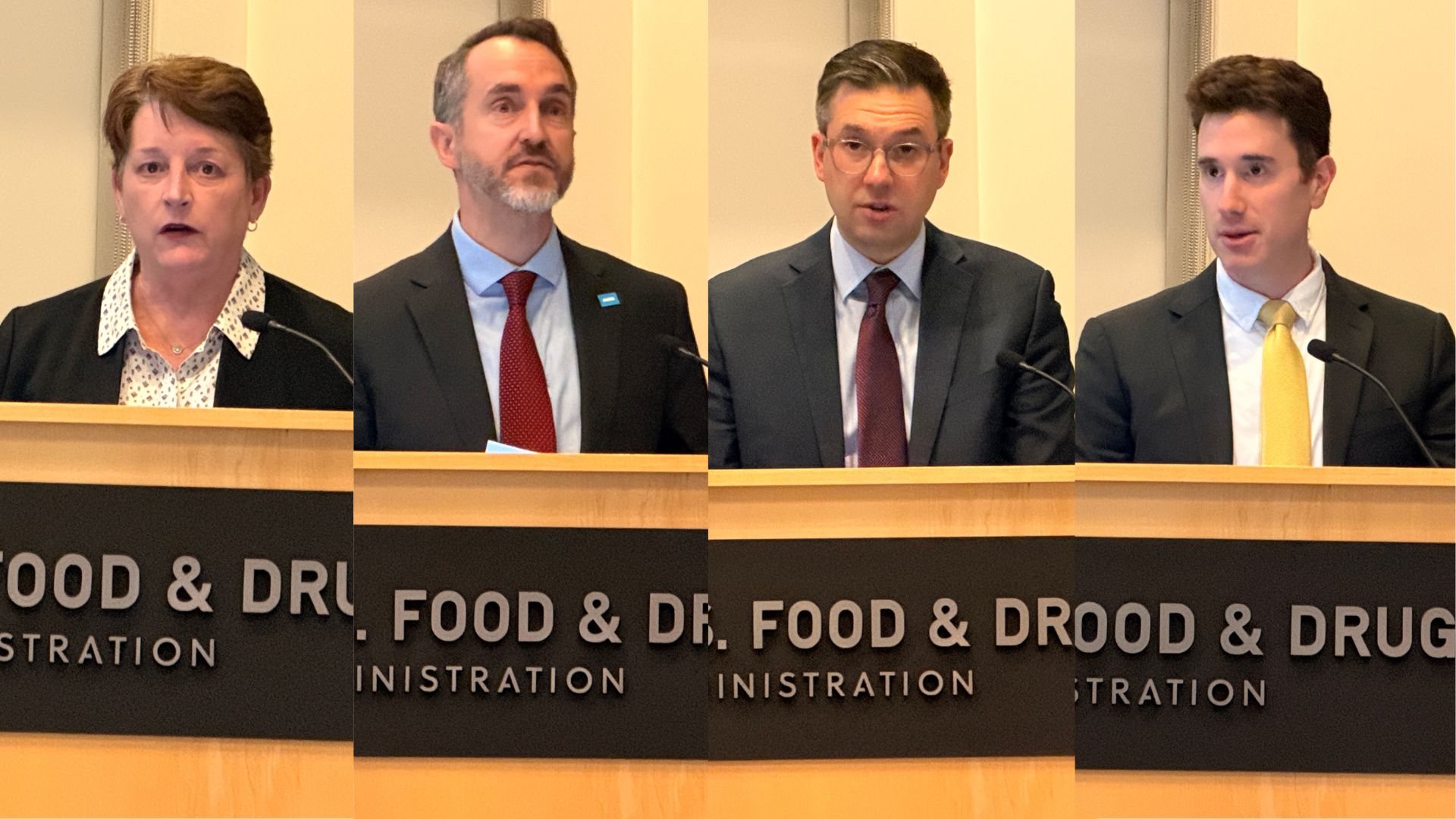
Industry representatives outlined their expectations for BsUFA IV.
Juliana Reed, executive director of The Biosimilars Forum, and Scott Kuzner, senior director of sciences and regulatory affairs at the Biosimilars Council, said biosimilars have lowered drug costs and saved the U.S. health care system billions of dollars. Among the concerns raised:
- Overall review timelines remain long, even as FDA moves to reduce unnecessary comparative clinical studies in some biosimilar development programs.
- Communication, transparency and inspection efficiency need improvement.
- Support for FDA’s data-driven approach to reducing unnecessary clinical trials.
- Exploring a single global comparator and improving human factors evaluation for drug-device combination products.
- Funding stability, including attention to how the spending trigger could affect user fee program funding. The trigger is a statutory condition tied to FDA maintaining a specified level of non-user-fee spending on the relevant review activities.
Sean Hilscher, senior director of science and regulatory advocacy at the Pharmaceutical Research and Manufacturers of America (PhRMA), speaking for innovator drug companies, said BsUFA IV should keep a science-based regulatory framework, steady communication, transparent review timelines and measurable performance goals to sustain FDA’s resources and the predictability of review.
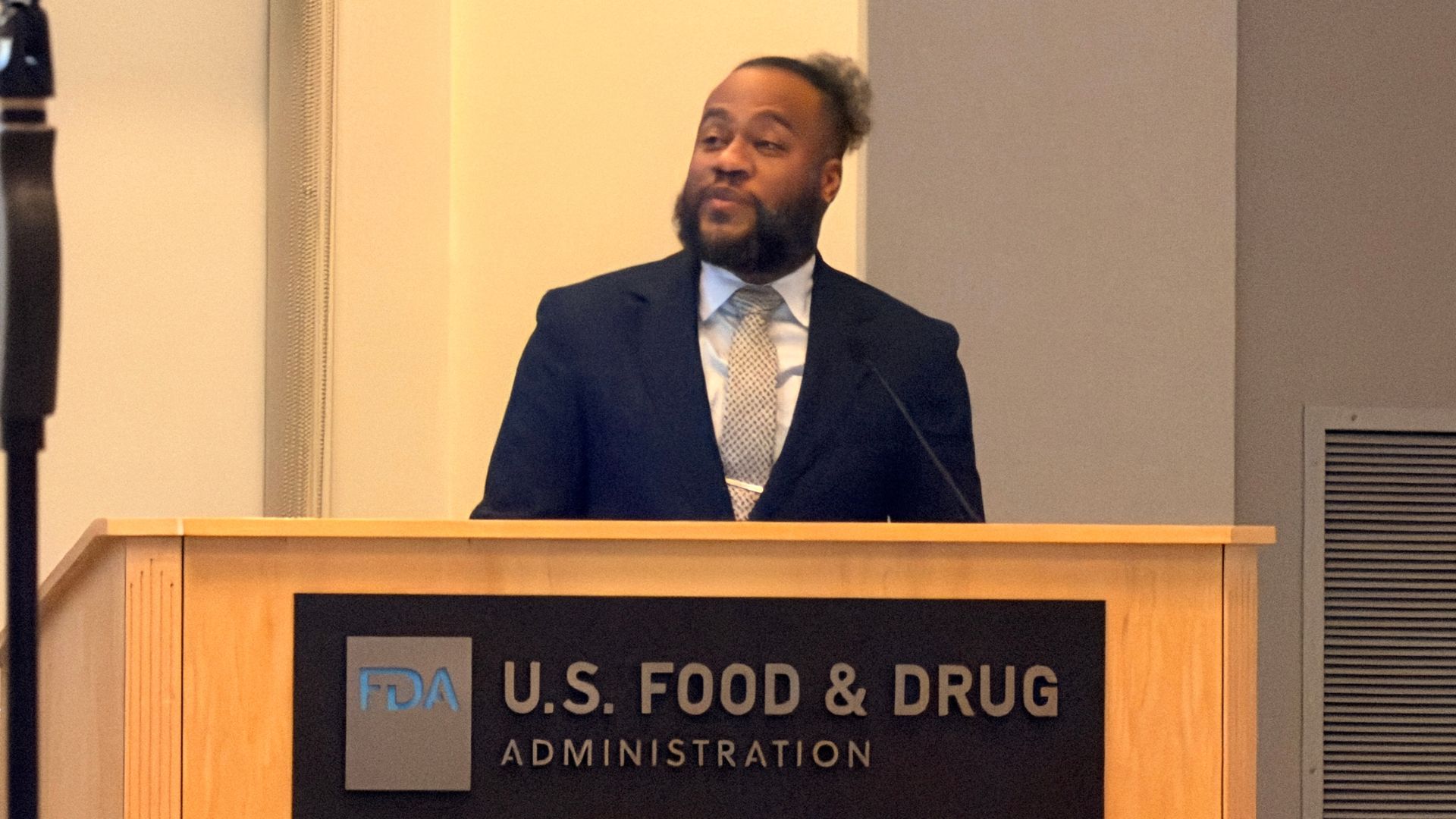
Aaron Josephson of Teva Pharmaceuticals said biosimilars lower costs while also supporting patient productivity and broader social benefit. He recommended better timing of information requests, fewer late-cycle labeling comments, earlier inspection scheduling, transparent use of regulatory science funding, and giving final sign-off authority to the office most familiar with the product, the Office of Therapeutic Biologics and Biosimilars (OTBB).
Timeline: current authorization expires Sept. 30, 2027
The meeting was the first step in the reauthorization process. Under the plan FDA presented, the next milestones are:
- Jan. 2, 2026: Deadline for written public comments.
- Spring to summer 2026: FDA and industry are expected to hold technical negotiations.
- After negotiations: FDA internal review of the reauthorization recommendations.
- Jan. 15, 2027: FDA plans to transmit its recommendations to Congress.
- Sept. 30, 2027: The current BsUFA III authorization expires. For FDA to continue collecting these fees in fiscal 2028, Congress must pass new authorizing legislation.
FDA said it would hold monthly consultations with stakeholders during negotiations and publish meeting summaries.
Data note: In opening remarks, FDA cited 78 approved biosimilars; presentation slides from the same meeting listed 79. This article uses the figure from the opening remarks.