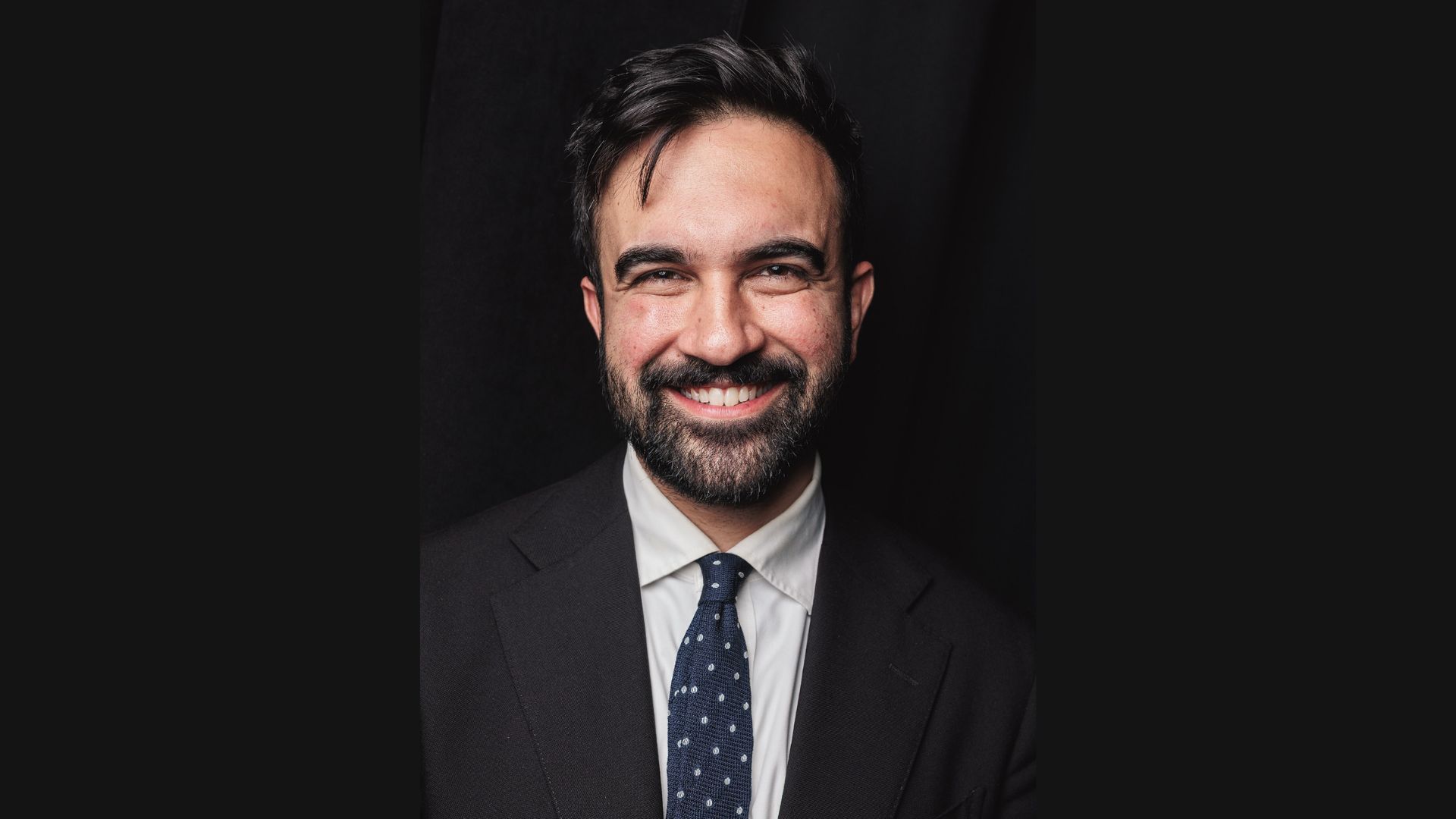
[VT | New York, Nov. 4, 2025 ] In a stunning political upset, New York City has witnessed a historic transformation: 34-year-old democratic socialist Zohran Mamdani has been elected mayor, defeating several high-profile opponents to become the city’s next leader.
Mamdani’s victory stretched from Brooklyn’s gentrified corridors to the working-class immigrant enclaves of Queens, uniting a broad coalition of voters across class and community lines.
Background and Historical Significance
During his campaign, Mamdani pledged to tackle the city’s affordability crisis, proposing bold measures such as a rent freeze, free public transit, and the establishment of city-run grocery stores.
He will become New York City’s first Muslim mayor, its first South Asian mayor, and the youngest in nearly a century.
His victory is widely seen as a watershed moment for American urban politics — a breakthrough for progressive, anti-establishment forces within the Democratic Party, and a sign of the growing influence of the Democratic Socialists of America (DSA).
Key Factors Behind His Victory
1. High Voter Turnout
Reports indicate that this election saw the highest voter turnout in decades. While final numbers have yet to be released, young and first-time voters were believed to have played a decisive role.
2. A Broad, Cross-Class Coalition
Mamdani’s appeal extended beyond traditional progressive strongholds. His campaign drew significant support from immigrant and working-class communities, as well as residents of Brooklyn neighborhoods reshaped by gentrification.
3. Anti-Establishment Momentum
Running as an outsider and a relative newcomer to citywide politics, Mamdani positioned himself as the face of a “new politics.” His defeat of former Governor Andrew Cuomo in the Democratic primary served as a pivotal moment in his rise.
4. Ranked-Choice Voting
New York City’s Ranked-Choice Voting system allowed nontraditional candidates to break through the dominance of political elites, benefiting Mamdani’s grassroots campaign.
Challenges Ahead
Turning Promises into Policy:
Mamdani’s ambitious agenda — including a rent freeze, city-owned grocery stores, and fare-free transit — will test his ability to navigate complex relationships across city, state, and federal governments.
Building Political Alliances:
Despite his victory, Mamdani lacks broad support from many Democratic Party leaders, which could complicate efforts to pass key initiatives.
Public Safety and Fiscal Pressure:
As mayor of the nation’s largest city, he will face challenges related to safety, education, housing, transit, and budget management — all while balancing progressive ideals with practical governance.
Economic and Demographic Shifts:
Rising rents, widening inequality, and population turnover continue to reshape New York City. How Mamdani addresses these systemic issues will define his administration’s legacy.
Outlook
Mamdani’s election carries symbolic and political weight on multiple fronts:
- It represents a significant expansion of left-wing power within the Democratic Party at the local level.
- It signals a policy shift for New York City — away from traditional “law-and-order” priorities toward affordability, public services, and public ownership initiatives.
- Nationally, his victory could become a template for grassroots progressives challenging establishment figures in major urban centers.
Zohran Mamdani will officially assume office on January 1, taking charge of a city at the crossroads of economic inequality, cultural transformation, and political renewal.