Cultural Visibility and Federal Legislative Trajectory
VisibleTogether | Policy Brief
U.S. Representative Grace Meng, Chair of the Congressional Asian Pacific American Caucus (CAPAC), introduced a bipartisan House resolution recognizing the cultural and historical significance of Lunar New Year.
The resolution, co-sponsored by 56 Members of Congress, formally acknowledges the holiday’s importance to millions of Asian Americans and communities nationwide.
Symbolic Recognition in Federal Records
As a simple House resolution (H. Res. 1061), the measure does not establish statutory change. It does not create a federal holiday nor require Senate concurrence. Instead, it functions as a formal expression of recognition within the House of Representatives.
Symbolic resolutions often signal institutional awareness and evolving cultural inclusion within federal discourse. While not legally binding, they establish legislative record.
Legislative Context
The resolution follows Representative Meng’s earlier introduction of the “Lunar New Year Day Act” (H.R. 794), which proposes amending Title 5 of the U.S. Code to designate Lunar New Year as a federal holiday. That bill remains in committee.
The dual presence of symbolic and legislative initiatives reflects a broader trajectory: cultural observances entering federal policy consideration through incremental mechanisms.
State-Level Developments
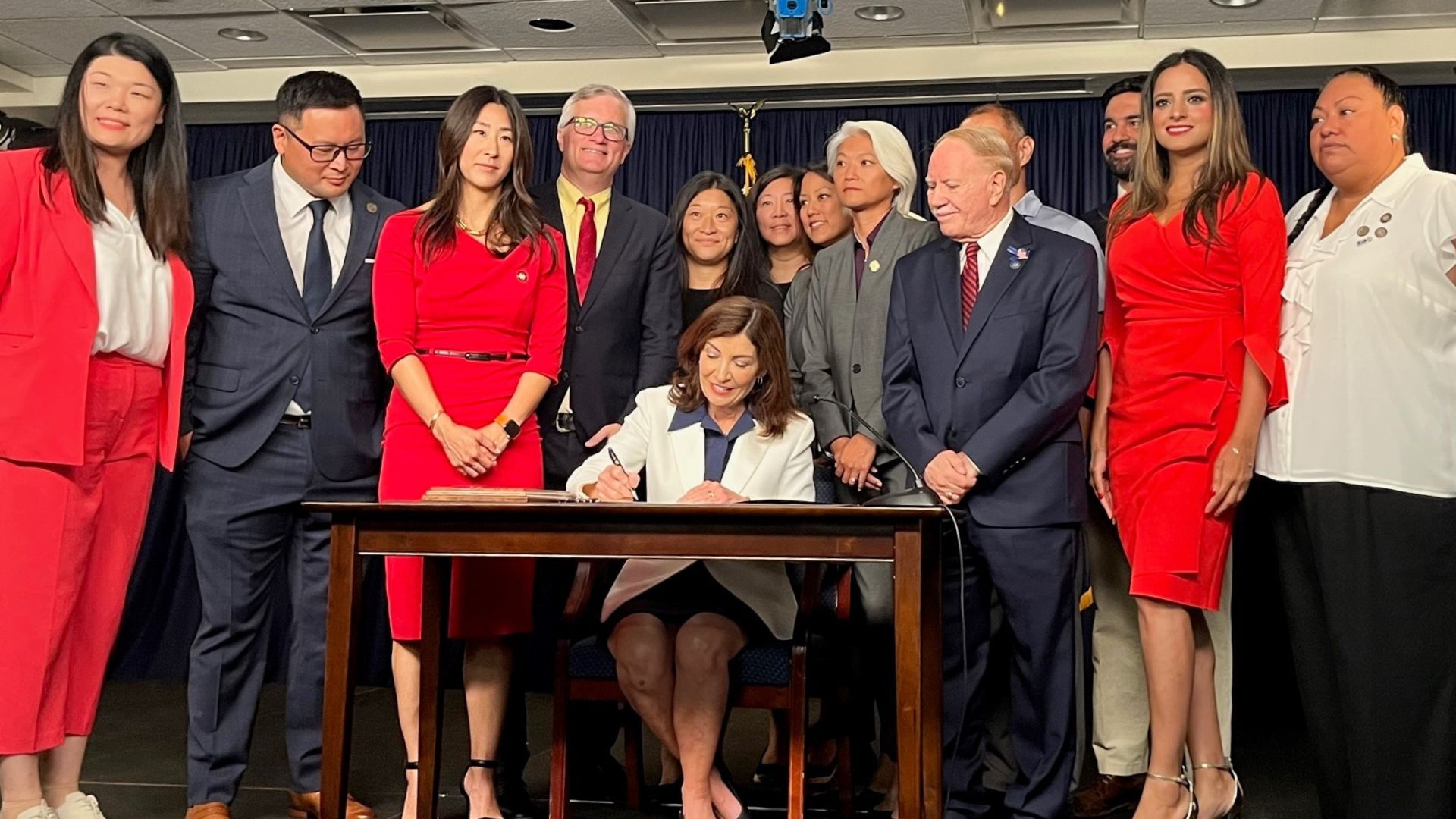
In 2023, New York Governor Kathy Hochul signed legislation making Lunar New Year a public school holiday statewide, following earlier advocacy efforts by Meng during her tenure in the New York State Legislature.
Institutional Implications
The resolution highlights the continued expansion of Asian American visibility within federal proceedings. Future legislative action will determine whether recognition advances toward statutory designation.
VisibleTogether will continue monitoring developments related to federal holiday policy and Asian American legislative initiatives.