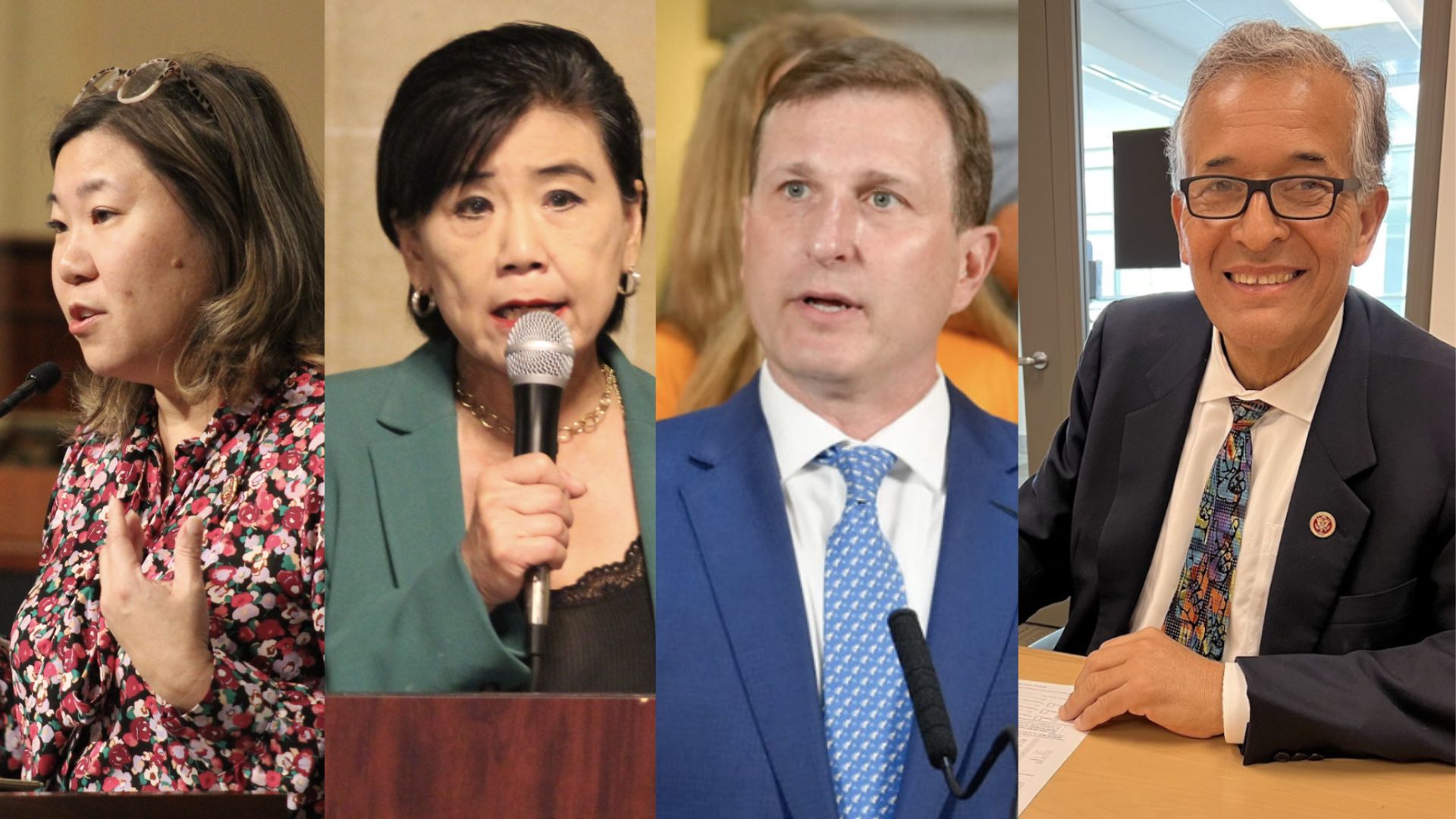
[VT Washington D.C. January 23, 2026] Reps. Grace Meng (NY-06), Chair of the Congressional Asian Pacific American Caucus (CAPAC), Judy Chu (CA-28), CAPAC Chair Emerita, along with Reps. Dan Goldman (NY-10) and Juan Vargas (CA-51), have introduced the Language Access for All Act of 2026, legislation intended to strengthen access to federal programs and services for individuals with limited English proficiency (LEP).
The bill would establish a statutory framework for language access across federal agencies, including translation and interpretation services, with the goal of ensuring that members of the public are able to understand and engage with federally administered programs. Supporters of the legislation say it is designed to promote consistency and clarity in how language services are provided, while maintaining flexibility for agency implementation.
The introduction of the legislation follows recent federal policy adjustments related to language use in government operations. In March 2025, President Trump signed an executive order designating English as the official language of the United States and rescinding Executive Order 13166, which had guided federal agencies for more than two decades in providing language access services. Subsequent guidance from the Department of Justice emphasized English language acquisition while allowing agencies discretion in determining how multilingual services are offered.
According to publicly available data, approximately 25 million people in the United States—about eight percent of the population—have limited English proficiency. Language access is particularly relevant in areas such as health care, emergency response, housing assistance, tax administration, and small business support, where clear communication can affect individuals’ ability to access services and comply with program requirements.
Sponsors of the Language Access for All Act of 2026 say the legislation seeks to provide federal agencies with clear standards and coordination mechanisms, while supporting effective service delivery. The bill also addresses the responsible use of emerging technologies, including artificial intelligence–assisted translation tools, which would be subject to oversight, privacy protections, and quality safeguards, and would not replace qualified professional translators or interpreters.
The legislation has received support from more than 50 national organizations representing health care providers, legal and consumer advocacy groups, language professionals, community-based organizations, and civic engagement groups. Supporters note that language access can help improve administrative efficiency and public participation by ensuring that information about government programs is understandable to the communities they serve.
As the bill moves forward, lawmakers say continued discussion will focus on how federal agencies can best balance clarity, accessibility, and effective administration in serving a linguistically diverse public.
—
The Language Access for All Act of 2026 is endorsed by the following organizations:
American Translators Association
Americans for Financial Reform
Apicha Community Health Center
Asian Americans Advancing Justice – AAJC
Asian Americans Advancing Justice Southern California (AJSOCAL)
Asian & Pacific Islander American Health Forum(APIAHF)
Asian and Pacific Islander American Vote (APIAVote)
Association of Asian Pacific Community Health Organizations(AAPCHO)
Association of Language Companies
Center for Human Rights and Constitutional Law
Certification Commission for Healthcare Interpreters (CCHI)
Chinese for Affirmative Action
Colorado Language Access Coalition
Connecticut Fair Housing Center
CoSET (Coalition for Sign Language Equity in Technology)
Empowering Pacific Islander Communities (EPIC)
Global Consortium of Nursing and Midwifery Studies
Japanese American Citizens League
Joint National Committee for Languages (JNCL)
National Council for Languages and International Studies (NCLIS)
Language Policy & Innovation Institute
Latino Community Fund of Georgia(LCF Georgia)
League of United Latin American Citizens(LULAC)
Massachusetts Law Reform Institute
National Asian American Pacific Islander Mental Health Association(NAAPIMHA)
National Asian Pacific American Women’s Forum(NAPAWF)
National Asian Pacific American Women’s Forum (NAPAWF)
National CAPACD- National Coalition for Asian Pacific American Community Development
National Consumer Law Center (NCLC)
National Council of Asian Pacific Americans(NCAPA)
NCAPIP(National Council of Asian Pacific Islander Physicians)
National Immigration Law Center
North East Medical Services (NEMS)
Sauti Yetu Center for African Women
Sikh American Legal Defense and Education Fund (SALDEF)
Southeast Asia Resource Action Center(SEARAC)
Spring Institute for Intercultural Learning
Stakeholders Advocating for Safe and Ethical use of AI in Interpreting Task Force (SAFE-AI TF)