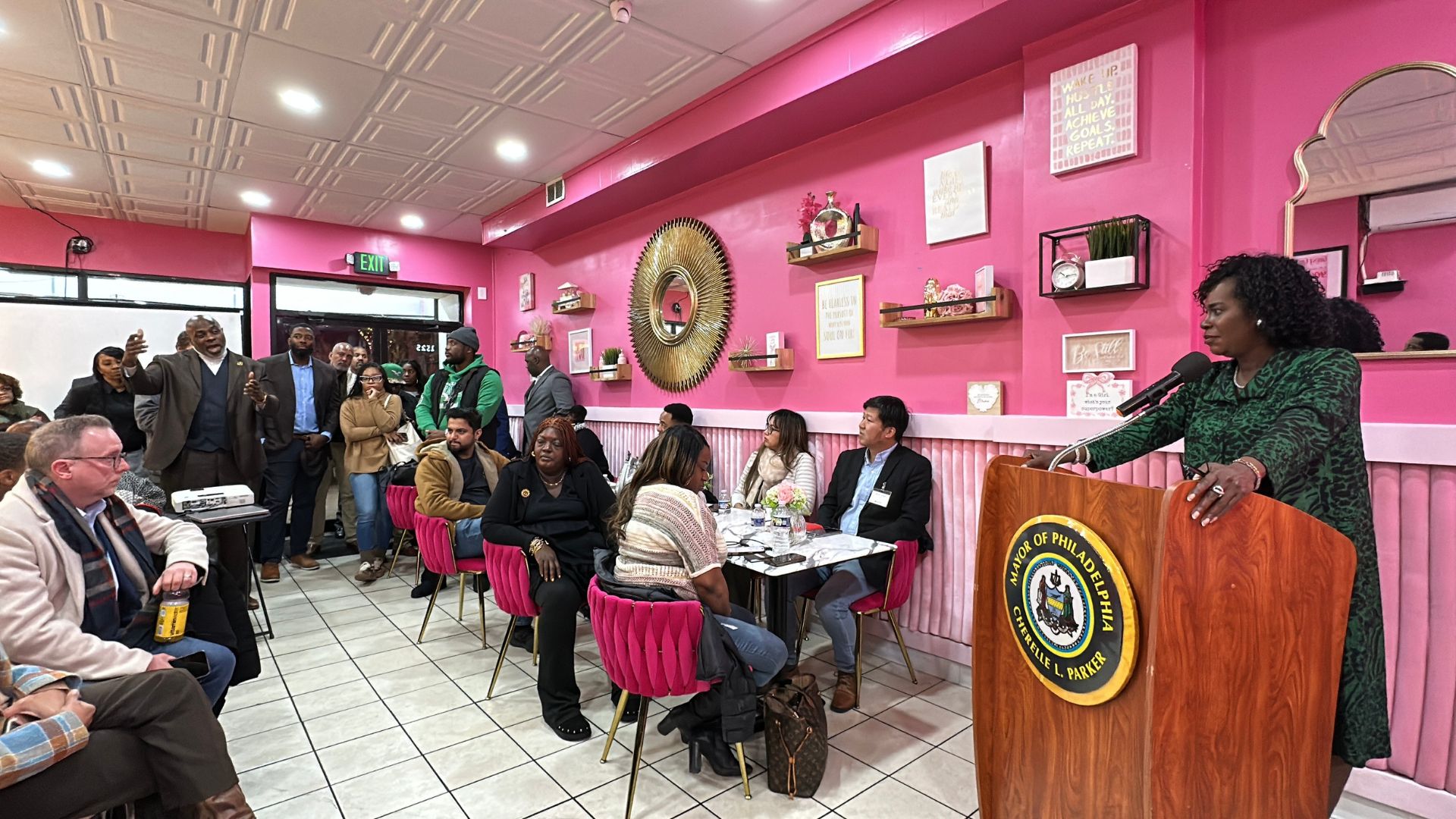
[VT – Philadelphia, PA November 17, 2025] Philadelphia Mayor Cherelle L. Parker, joined by City Solicitor Renee Garcia, Deputy Mayor Vanessa Garrett Harley, and other key city officials, convened a community roundtable with representatives from diverse business organizations—including the Asian American Chamber of Commerce, African American Chamber of Commerce, and Greater Philadelphia Hispanic Chamber of Commerce—and local small business owners at the Pink Plate Café. The event marked the official launch of a new government procurement framework centered on “Small and Local Businesses,” designed to comply with federal Supreme Court rulings on affirmative action while addressing the ineffectiveness of the 40-year-old Minority and Women-Owned Business Enterprise (MWBE) program, aiming to advance economic equity through greater inclusivity.
Policy Background: Driven by Legal Compliance and Practical Needs
City Solicitor Renee Garcia detailed the legal impetus for the policy shift during the roundtable. In the 2023 landmark case Students for Fair Admission v. Harvard, the U.S. Supreme Court ruled that race-based presumptions of disadvantage in affirmative action programs are unconstitutional. Government initiatives now must pass “strict scrutiny”—proving they address discrimination perpetrated by the government itself, with time-bound and narrowly tailored measures. Garcia emphasized that Philadelphia’s existing MWBE program, lacking data to prove government-induced discrimination and without defined timelines, faced imminent litigation risks, potentially resulting in millions of dollars in legal fees and program shutdowns.
More critically, data revealed the failure of the old policy to deliver on its promises. A 2025 Pew Foundation report showed Philadelphia’s Black business density continued to lag behind national levels and ranked last among peer cities between 2012 and 2022. A Drexel University study further found that while there were 22 white-owned employer firms per 10,000 white residents, Black residents had only 2 Black-owned firms per 10,000 people. “The past 40 years of policy focused more on compliance than actual results,” noted Deputy Mayor Vanessa Garrett Harley. “Eighty percent of registered businesses never received city contracts, leaving Black and minority-owned enterprises struggling to achieve sustainable growth.”
Core Features of the New Policy: Prioritizing “Small and Local,” Strengthening Capacity Building and Data Tracking
Developed by Philadelphia’s newly established Office of Business Impact & Economic Advancement, the new framework introduces key innovations:
1. Dual Eligibility and Bid Preferences
- Small Businesses: Classified into three tiers—Emerging, Midsize, and Regional Middle-Market—based on annual revenue, employee count, and other criteria.
- Local Businesses: Defined as companies headquartered in Philadelphia, with over 60% of employees based in the city, or 50% of employees working in Philadelphia at least 60% of the time.
- Bid Preferences: A 10% bid preference for small local businesses on contracts under $1 million, and a 5% preference for contracts exceeding $1 million—replacing the previous race- and gender-based quotas.
2. Shifting from “Compliance-Oriented” to “Growth-Oriented”
The policy establishes a “Business Growth Pipeline Program” that tracks participating businesses quarterly using key performance indicators (KPIs) such as revenue growth, employee headcount, and contract value. Customized support—including working capital access, bonding assistance, and bid coaching—will help small businesses transition from subcontractors to prime contractors, enhancing their competitiveness in both public and regional markets.
3. Cross-Departmental Integration and Public-Private Partnerships
Philadelphia has consolidated fragmented agencies, including the Office of Economic Opportunity (OEO) and the former Office of Minority Business Success, under the new Office of Business Impact & Economic Advancement, led by Nadir Jones—an expert with experience in diverse business programs at the New York Metropolitan Transportation Authority and New Jersey Department of Transportation. The city aims to increase local procurement spending by 50%, potentially injecting an additional $229 million into the Philadelphia economy through partnerships with the private sector and philanthropic organizations.
Diverse Perspectives: Capital Access and Process Optimization Take Center Stage
While welcoming the new policy, business leaders highlighted key priorities. Dela Clark, President and CEO of The Enterprise Center, emphasized the critical need for capital, announcing a $1 billion fundraising goal over the next five years to support local businesses and offering “capital readiness” training. Jack Chen, a member of the Asian American Chamber of Commerce and local restaurant owner, called for simplified certification processes and bilingual services to better support immigrant-owned small businesses.
Several business owners urged improvements to the city’s payment system, noting that current delays—sometimes lasting months—have strained cash flow for small enterprises, hindering their ability to participate in government contracts. Mayor Parker responded by acknowledging the issue and committing to reform the outdated payment process, with plans to establish a feedback mechanism to address implementation challenges in real time.
Mayor Reaffirms Commitment: Upholding DEI Values with Results-Driven Equity
In her closing remarks, Mayor Parker stressed that the policy shift does not abandon diversity, equity, and inclusion (DEI) principles but rather advances them through legal and effective means. “As a Black woman who grew up navigating the intersections of race and gender, I understand the urgency of economic opportunity,” she said. The new policy will continue tracking participation data for minority, women, and LGBTQ+ businesses, with targeted interventions if underrepresentation persists.
Philadelphia has already launched the “Small Business Catalyst Fund,” distributing $2.48 million to 61 businesses in its first round—49% to Black-owned enterprises, 11% to Asian-owned businesses, and 11% to Latino-owned firms. As the new procurement policy rolls out, the city plans to reserve opportunities for local small businesses in the 250th-anniversary events in 2026, ensuring equitable access across communities through a directory-based system.
“This is not the end of our commitment to equity—it’s an evolution,” said Deputy Mayor Harley. “We aim to make government procurement a true engine of local economic growth, empowering small businesses in every neighborhood to thrive.”