[VT | March 10, 2026 | New York]
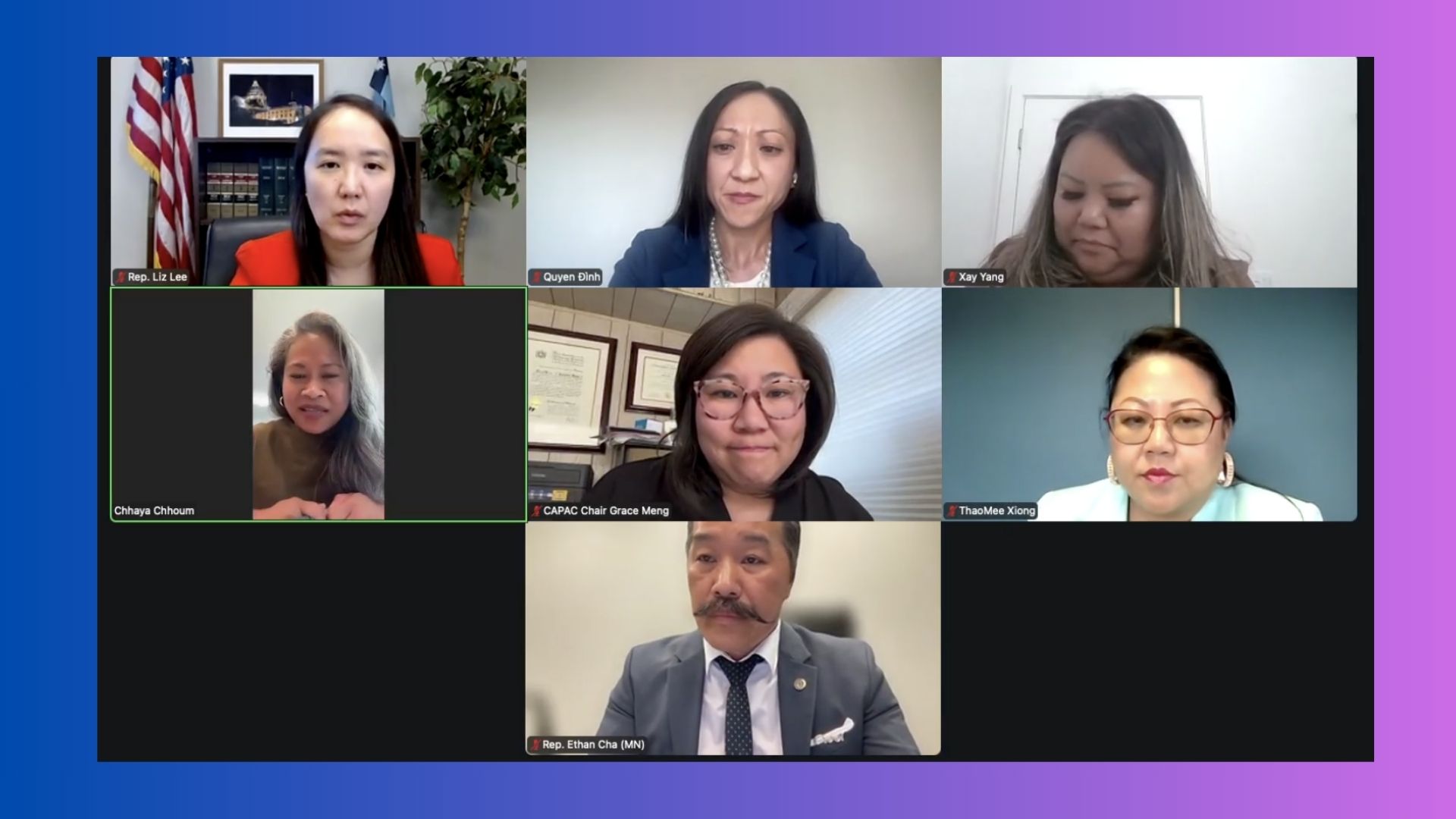
Rep. Grace Meng of New York, Chair of the Congressional Asian Pacific American Caucus (CAPAC), joined members of the Minnesota State Asian Pacific Caucus and several community organizations in a virtual press call to discuss the impact of recent immigration enforcement actions on Asian American communities.
Participants included Minnesota State Representative Liz Lee, Minnesota State Representative Ethan Cha, and leaders from several community-based organizations, including Xay Yang, Executive Director of Transforming Generations; Kaziah Josiah, Executive Director of Urban Village; Quyen Đình, Executive Director of the Southeast Asia Resource Action Center (SEARAC); and Chhaya Chhoum, Executive Director of the Southeast Asian Freedom Network (SEAFN).
During her opening remarks, Rep. Meng referenced several cases raised by community advocates. Among them was the death of Rohingya refugee Nurul Amin Shah Alam near Buffalo, New York. According to speakers, Alam, who was nearly blind and spoke little English, was left miles away from his home by U.S. Border Patrol agents and was later found dead.
Meng also mentioned the case of Chongly Scott Thao in Minnesota. Community advocates said Thao, a Hmong American and U.S. citizen, was taken from his home by Immigration and Customs Enforcement (ICE) agents without a warrant and forced to stand outside in freezing temperatures.
Several speakers said that following enforcement actions known as Operation Metro Surge and Operation PARRIS, some Asian American residents in Minneapolis reported feeling uneasy about potential encounters with immigration enforcement. Some community members have reportedly begun carrying passports or identification documents when leaving home.
Minnesota State Representative Liz Lee said that community organizations have been working to provide “Know Your Rights” trainings and legal resources to help immigrant families understand their options. She also noted concerns raised by Korean American organizations about the legal status of Korean adoptees in the state.
Community leaders described a range of challenges faced by affected families. Xay Yang of Transforming Generations said some families have struggled to locate detained relatives, particularly when updates in the ICE detainee locator system are delayed. She also noted concerns about medical care and financial stability for families whose primary income earners have been detained.
Quyen Đình of SEARAC highlighted the long-standing issue of deportation orders affecting Southeast Asian communities. According to her remarks, more than 15,000 Cambodian, Laotian, and Vietnamese community members currently face removal orders. She noted that nearly 900 individuals were deported to those countries in 2025, compared with an average of about 90 per year between 1996 and 2023.
Chhaya Chhoum of SEAFN said deportation remains a significant concern among Southeast Asian refugee communities, many of whom came to the United States decades ago. Tao Mee Xiong, Executive Director of the Coalition of Asian American Leaders, also discussed details surrounding the Thao case and said the incident has prompted conversations about enforcement procedures and civil rights protections.
During the Q&A session, participants were asked what forms of identification residents should carry if asked to prove citizenship or legal status. Community representatives suggested that individuals organize important documents and seek legal assistance if needed. Some organizations also advised residents to carry copies of identification documents rather than originals to avoid the risk of losing them.
ChineseinUS (美华社) asked how lawmakers and federal agencies could improve language access and communication so immigrant communities can better understand their rights and available resources, and whether ethnic media could help support community reporting efforts.
Rep. Meng responded that language access remains an important issue. She said ethnic media and community organizations play a valuable role in sharing information, documenting community experiences, and helping immigrant communities better understand public policies and government institutions.
Participants noted that as policy discussions continue, improving access to clear and multilingual information will remain an important topic for many immigrant communities seeking to better understand legal processes and public resources.