[VT | March 17, 2026 | Philadelphia PA]
Every March, one color takes over the streets of Philadelphia: green.
People put on green clothing, wear shamrocks, and head to parades, concerts, and neighborhood events to celebrate St. Patrick’s Day. But behind the festive atmosphere is a much deeper civic story—one tied to immigration, labor, public institutions, and the long process by which one community moved from exclusion to influence.
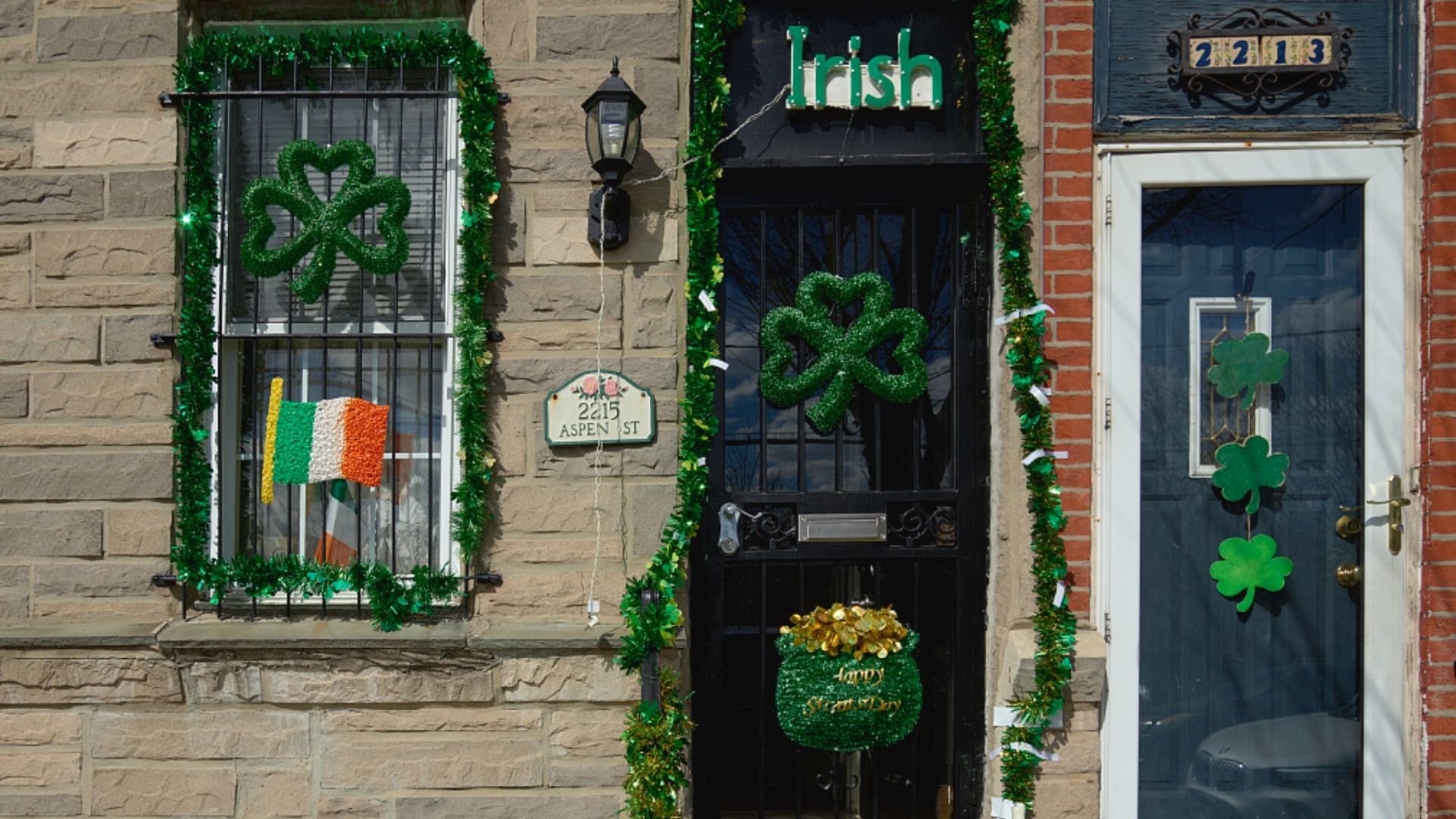
In Philadelphia, St. Patrick’s Day is not only a cultural celebration. It is also a reminder of how immigrant communities have helped build the city’s civic life.
St. Patrick’s Day is observed every year on March 17, in honor of Saint Patrick, the patron saint of Ireland. The date is traditionally associated with his death, which is why the holiday began as a Christian feast day. Over time, it evolved into a broader symbol of Irish identity and culture. Because the date is fixed, it falls on a different day of the week each year; in many U.S. cities, major parades are often held on the nearest weekend so more people can participate.
From religious observance to public culture
According to tradition, Saint Patrick was born in Roman Britain, not Ireland. At age 16, he was captured by Irish raiders and taken to Ireland, where he spent six years in slavery. After escaping, he later returned to Ireland as a missionary and is widely credited with helping spread Christianity and establish religious institutions there.
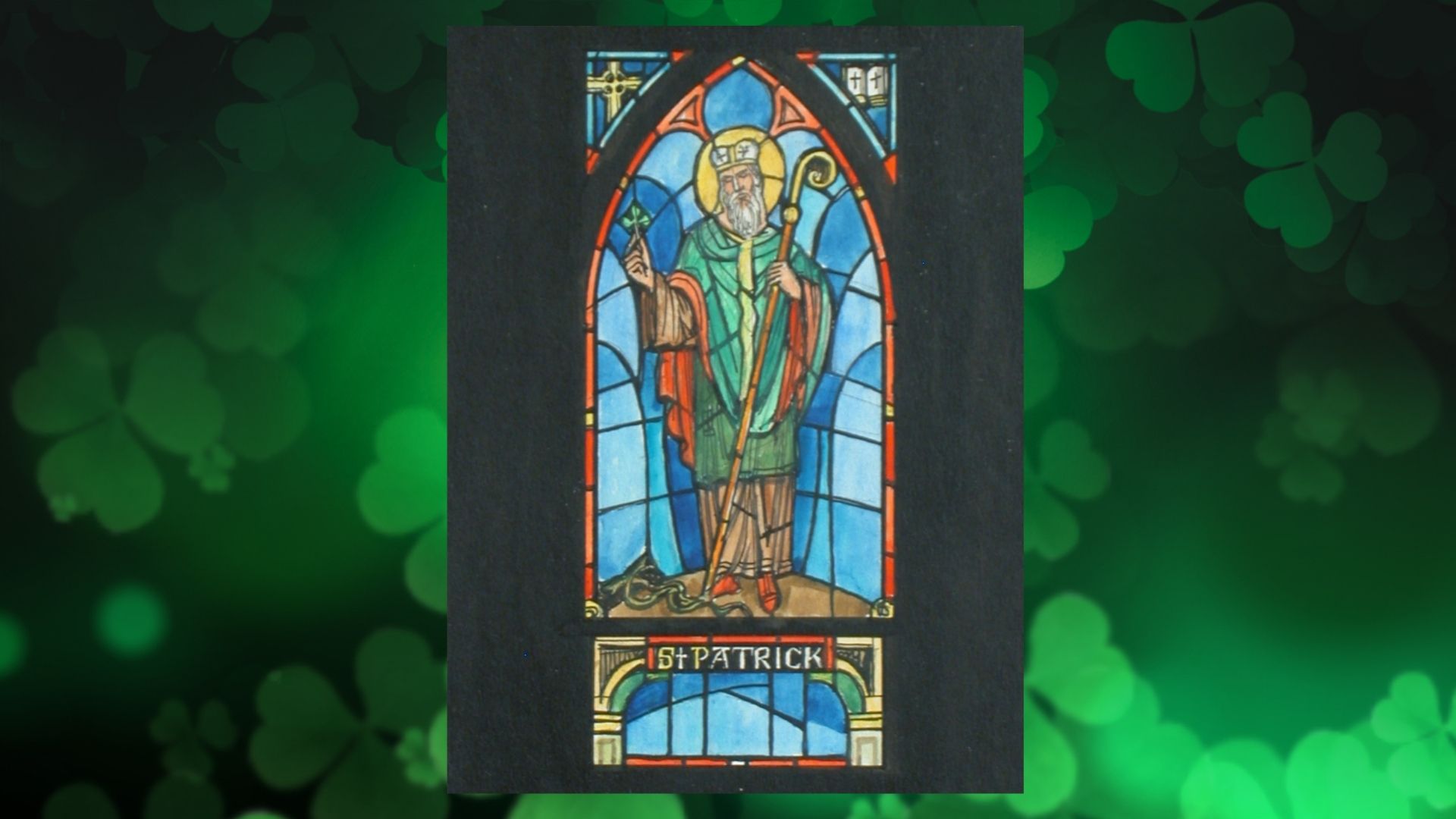
In present-day Ireland, St. Patrick’s Day is both a religious observance and a national public holiday. In Dublin, multi-day celebrations, parades, and public events draw large crowds each year. The shamrock became one of the holiday’s most recognizable symbols, tied to the story that Patrick used it to explain the Christian concept of the Trinity.
What began as a religious feast day gradually became a public expression of Irish culture, history, and national identity.
Why St. Patrick’s Day became so prominent in the United States
St. Patrick’s Day became one of the most widely recognized ethnic holidays in the United States because of 19th-century Irish immigration.
In the mid-1800s, Ireland was devastated by the Great Famine, also known as the Irish Potato Famine. Between 1845 and 1852, crop failure and mass hunger led to widespread death and forced migration. Large numbers of Irish families left for North America in search of survival and opportunity.
Famine was not the only reason. Chronic poverty, unequal land systems, and political and religious pressures under British rule also pushed people to leave. At the same time, industrializing American cities needed workers.
That combination made Irish immigrants one of the most significant immigrant populations in 19th-century America—and carried Irish traditions, including St. Patrick’s Day, into U.S. public life.
Why Philadelphia became a major destination
Among American cities, Philadelphia became one of the most important destinations for Irish immigrants.
The city was a major East Coast port, making it a natural point of arrival. It was also rapidly industrializing and needed labor. Philadelphia’s early Quaker tradition of religious tolerance made it, at least in principle, more open than some other places to immigrants arriving with limited resources.
For many new arrivals, Philadelphia offered jobs, social networks, and the possibility of rebuilding life.
Irish presence in Philadelphia, however, goes back even earlier than the famine era. Before the American Revolution, Irish residents were already active in the city’s commercial and civic life. The Society of the Friendly Sons of St. Patrick, founded in 1771, is one of the oldest Irish organizations in the United States and was originally created to assist immigrants from Ireland. Philadelphia also held one of the earliest St. Patrick’s Day parades in the country that same year.
This history matters because it shows that Irish communities were not only celebrating culture—they were also building institutions.
From industrial labor to city building
When large numbers of Irish immigrants arrived in Philadelphia, many entered physically demanding, low-paid work. Their labor became part of the city’s industrial and infrastructure growth.
In textile mills, especially in places like Kensington and Manayunk, Irish workers filled factory jobs involving machinery, loading, storage, and manual labor.
In shipyards, Philadelphia’s industrial economy depended heavily on workers in metal and maritime trades. Major companies such as William Cramp & Sons Shipbuilding Company became symbols of the city’s industrial era, and Irish immigrants worked there as ironworkers, riveters, shipbuilders, and dock laborers.
They also worked in metalworking, railroad construction, and related heavy industry. Irish labor helped lay tracks, process metal, expand transportation systems, and support the growth of the regional economy.
They helped build canals, roads, port facilities, and rail lines—physical systems that supported commerce, movement, and urban growth. One of the most tragic examples is Duffy’s Cut, near Malvern, Pennsylvania, where 57 Irish immigrant railroad workers died in 1832 during a cholera outbreak. Their story is a reminder that the building of civic and economic infrastructure often came at enormous human cost.
Exclusion, riots, and the struggle to belong
The early experience of Irish immigrants in Philadelphia was not one of immediate acceptance.
As Irish Catholic immigration increased in the mid-19th century, anti-Catholic and anti-immigrant sentiment intensified. The Lombard Street Riot in 1842 and the Philadelphia Nativist Riots in 1844 reflected broader tensions around religion, race, and labor competition. In the 1844 riots, Catholic churches were attacked and burned.
These events are an important part of Philadelphia’s civic history. They show that groups now seen as established were once treated as outsiders. Irish immigrants had to build community institutions not only to preserve identity, but also to create safety, mutual support, and access to opportunity.
Over time, Irish Philadelphians developed churches, benevolent societies, county associations, schools, and civic organizations. These structures helped newcomers find work, connect with one another, and navigate city life. In that sense, they were building not only community, but also what today might be called civic infrastructure: the networks and institutions that help people participate in public life.
Entering public institutions: police, fire, and city government
As Irish families became more economically stable and socially rooted, many moved into public service.
In Philadelphia, Irish Americans became especially associated with the police, fire service, and municipal government. These roles offered stability, social mobility, and a pathway into the formal institutions of the city.
For generations, the Philadelphia Police Department carried a strong Irish American presence. The same was true of the Philadelphia Fire Department, where traditions such as bagpipe music and participation in St. Patrick’s Day events remain culturally visible.
Irish Americans also gained influence in city departments, labor unions, and public administration. This shift—from industrial laborers to public workers and civic leaders—was a major part of the community’s long-term integration into Philadelphia’s institutional life.
It also illustrates a larger democratic pattern: immigrant communities do not only contribute labor. Over time, they often become part of the systems that govern, protect, and serve the public.
Education, faith, and long-term institution building
Irish influence in Philadelphia also extended into Catholic education and social service networks.
Institutions such as St. Joseph’s University, La Salle University, and Villanova University reflect the lasting importance of Catholic educational infrastructure in the region. Irish Americans played a major role in the growth and support of these networks.
This matters from a civic perspective because schools, parishes, charities, and community associations often serve as bridges between residents and public life. They are places where communities gain information, build trust, and develop pathways into broader participation.
For many immigrant families, these institutions made it possible to move from short-term survival to long-term belonging.
Families, symbols, and public memory
The history of Irish Philadelphia is also reflected in prominent families and public figures.
One of the best known is the Kelly family. The family’s East Falls home at 3901 Henry Avenue, built in 1929 by John B. Kelly Sr., became part of Philadelphia’s civic memory. Kelly was an Olympic champion, businessman, and public figure with major influence in city life. The scenic roadway along the Schuylkill River known as Kelly Drive remains one of Philadelphia’s best-known landmarks.
The family’s most internationally recognized member was Grace Kelly, who was born in Philadelphia, became a Hollywood actress, and later married Prince Rainier III, becoming Princess of Monaco. Her public profile carried a Philadelphia family story onto the global stage.
In politics, Irish American influence also remained visible. James Tate became Philadelphia’s first Irish Catholic mayor in 1962. Later figures, including William J. Green III and Jim Kenney, reflected the continued presence of Irish Americans in the city’s political structure.
Cross-community connection in a multicultural city
Philadelphia today is far more diverse than it was in the 19th or early 20th century. Irish Americans remain an important part of the city’s history, but they are now part of a much broader multicultural landscape.
That makes it important to understand St. Patrick’s Day not only as an Irish story, but as part of a larger civic story about how communities connect to public institutions and to one another.

A recent example came during the 2022 Lunar New Year. In a gesture of goodwill, a tiger-themed gift from the Chinese community was presented to ChineseinUS founder Yuebing Hong, and then passed on to then-Mayor Jim Kenney. The exchange reflected more than holiday celebration. It represented an act of civic relationship-building between community organizations, ethnic-language media, and city leadership.
Later, Mayor Kenney also offered Lunar New Year greetings in Chinese through Chinese-language media. Moments like these show how modern Philadelphia functions as a city of intersecting communities—where civic participation increasingly depends on communication across language, culture, and institutional boundaries.
This is where the role of a civic information platform becomes especially important. Community media and civic information networks help residents understand public institutions, access reliable information, and see themselves reflected in the city’s public life. They also help institutions communicate more effectively with the communities they serve.
Where Irish Philadelphia is visible today
Although traditional Irish neighborhoods inside the city are less concentrated than they once were, the legacy remains visible.
Historic Irish areas in Philadelphia include Kensington, Fishtown, Pennsport, and parts of South Philadelphia. Larger Irish American populations are now also found in nearby suburbs such as Drexel Hill, Crum Lynne, Gloucester City, and Havertown—the last of which is sometimes nicknamed the “33rd county,” referencing Ireland’s 32 counties.
Irish cultural traditions continue to appear in public life through St. Patrick’s Day parades, bagpipe performances, Irish pubs, dance, neighborhood associations, and Catholic observances. Local traditions such as Irish potato candy, along with sports and music tied to Irish heritage, remain part of the region’s cultural landscape.
More than a celebration
In Philadelphia, St. Patrick’s Day is not just a day for wearing green and attending a parade.
It is tied to a much larger history: from pre-Revolutionary Irish residents to famine-era immigrants; from textile mills, shipyards, and rail lines to police, fire, and city government; from discrimination and violence to institution-building and civic influence.
Put simply, the meaning of St. Patrick’s Day in Philadelphia goes beyond Irish heritage alone. It points to a broader truth about American cities: public life and public institutions are shaped over time by immigrant communities that build, challenge, and ultimately help sustain them.
The Irish American community is one important chapter in that story. Understanding that chapter helps explain not only the holiday, but the city itself.