H.O.M.E.
Mayor Cherelle L. Parker on January 20, 2026, announced a historic public-private partnership under the City’s H.O.M.E. Plan (Housing Opportunities Made Easy) that will bring $50 million in Building Trades investment to redevelop affordable senior housing at Brith Sholom Apartments in Wynnefield.
The initiative will deliver 336 affordable senior apartment homes and generate 545 union construction jobs, marking the largest building trades–backed affordable housing investment in Philadelphia’s history.
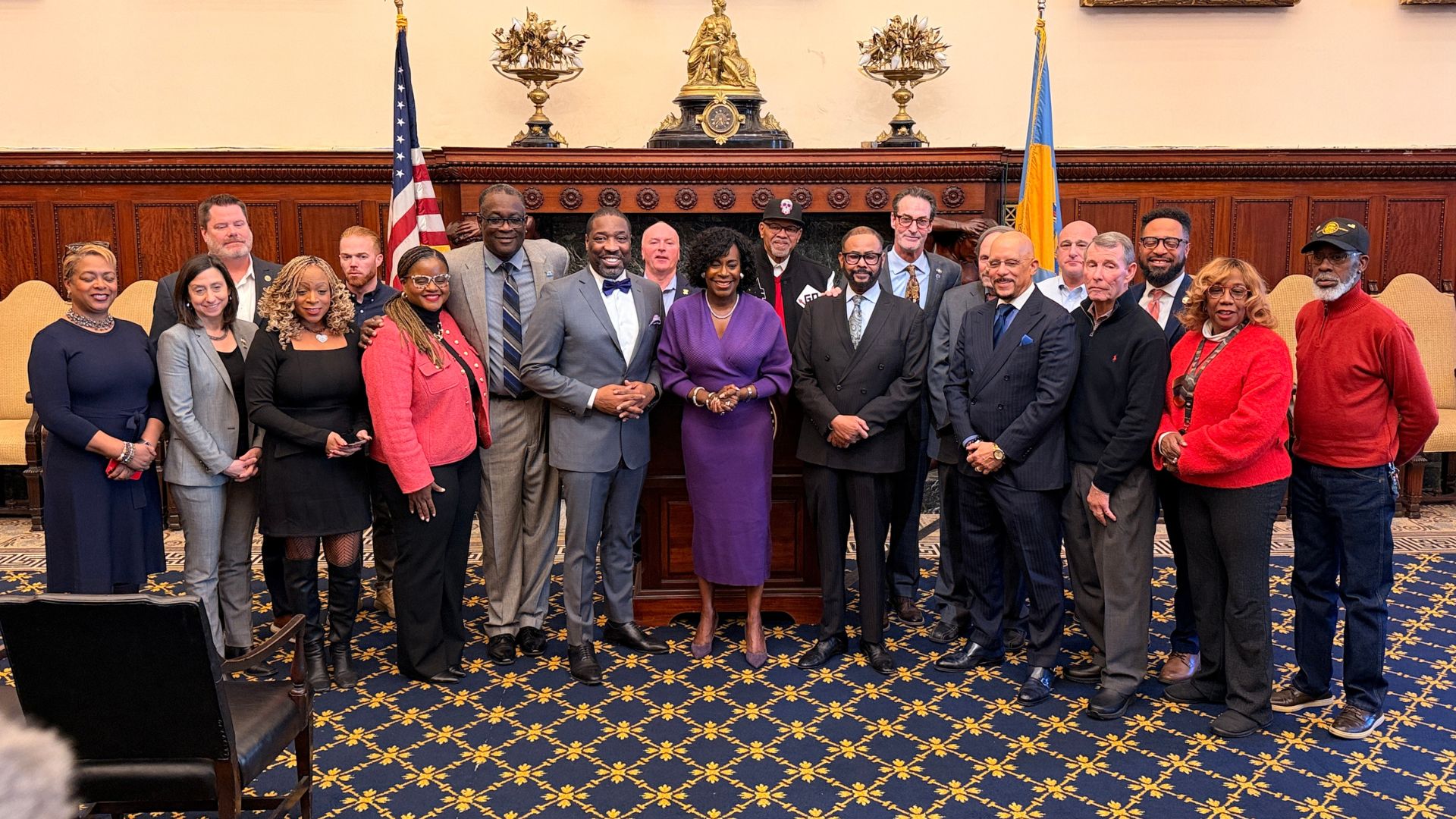
[VT January 20, 2026 Philadelphia PA] Speaking from the Mayor’s Reception Room at City Hall, Mayor Parker was joined by city, state, legislative, labor, and housing leaders to formally unveil the first-of-its-kind partnership among the City of Philadelphia, the Philadelphia Building and Construction Trades Council, and the Philadelphia Housing Authority (PHA).
“This milestone demonstrates what’s possible when we unite and leverage every available tool to meet the needs of Philadelphians,” Mayor Parker said. “This historic investment raises the bar for affordable senior housing while creating union jobs and delivering results at an unprecedented scale.”
Anchored in the $2 Billion H.O.M.E. Plan
The Brith Sholom redevelopment advances Mayor Parker’s H.O.M.E. Plan, a $2 billion citywide housing initiative designed to build, restore, and preserve 30,000 housing units across Philadelphia. City officials emphasized that the project exemplifies the Plan’s focus on leveraging public, private, and intergovernmental partnerships to expand access to safe, stable, and affordable housing.
Innovative Financing Structure
City Finance Director Rob Dubow explained that the agreement introduces a financing model never before used in Philadelphia. Under the deal, the Philadelphia Building and Construction Trades Council will extend a $50 million loan from its pension fund to PHA, secured by a City of Philadelphia guarantee. The loan will be repaid over 15 years at a 4.5 percent interest rate.
“This structure protects public interests, supports affordable housing, and ensures long-term financial stability,” Dubow said, noting the significance of the partnership from a municipal finance perspective.
Planning and Development Leadership
Jessie Lawrence, Director of the Department of Planning and Development, highlighted the extensive coordination that led to the announcement. He credited Mayor Parker with convening housing, labor, finance, and planning leaders beginning in 2024 to explore new approaches to redeveloping affordable housing at scale.
“This collaboration allowed us to combine public housing expertise with private investment and creative financing solutions,” Lawrence said.
Brith Sholom: From Emergency Acquisition to Redevelopment
PHA President and CEO Kelvin A. Jeremiah detailed the conditions that necessitated action at Brith Sholom Apartments, a senior housing complex that had significantly deteriorated under previous private ownership.
In September 2024, during Mayor Parker’s first year in office, the City partnered with PHA to support the emergency acquisition of the 360-unit property, preventing further decline and displacement. The newly announced $50 million Building Trades investment, combined with $8 million in prior City funding, will enable PHA to move forward with a comprehensive redevelopment.
Upon completion, Brith Sholom will provide 336 modern, affordable homes for seniors living on fixed or modest incomes, returning the property to productive use for the community.
Labor and Economic Impact
Ryan Boyer, Business Manager of the Philadelphia Building and Construction Trades Council, emphasized that the investment reflects a long-term commitment to the city.
“This isn’t an investment in the building trades,” Boyer said. “It’s a down payment on our city’s future. If we don’t have affordable housing, we can’t move forward.”
The project is expected to create 545 union construction jobs, supporting family-sustaining wages and workforce development.
Legislative and Intergovernmental Support
Elected officials from across city and state government attended the announcement and voiced support, including:
- Kenyatta Johnson, President, Philadelphia City Council
- Curtis Jones Jr., Philadelphia City Council (4th District)
- Jim Harrity, Philadelphia City Council (At-Large)
- Vincent Hughes, Pennsylvania State Senator and Chair of the Senate Appropriations Committee
- G. Roni Green, Pennsylvania State Representative (190th District)
Speakers underscored that the Brith Sholom project demonstrates how coordinated action among municipal government, public housing authorities, organized labor, and state partners can address Philadelphia’s most urgent housing challenges.
A Model for the Future
City officials said the Brith Sholom redevelopment is expected to serve as a blueprint for future public-private partnerships under the H.O.M.E. Plan, illustrating how innovative financing and collaboration can expand affordable housing opportunities citywide.
In a separate interview following the press conference, State Senator Vincent Hughes, Chair of the Pennsylvania Senate Appropriations Committee, underscored the importance of state-level financial participation in the Brith Sholom redevelopment.
Senator Hughes said the project would require additional support from Harrisburg to fully advance its financing and long-term sustainability. He noted that he would actively advocate for several million dollars in state funding to supplement the existing public-private partnership.
“The project we’re talking about needs some state support,” Hughes said. “We’re going to be advocates for bringing that state support in to help with the financing and to build several hundred new, up-to-date, modern units for senior citizens—so they have a safe place to live, a safe place to stay, and a safe place to thrive in their senior years.”
Hughes added that the goal would be to secure a few million dollars in state investment to help strengthen the project’s capital stack, reinforcing the collaboration among the City of Philadelphia, the Philadelphia Housing Authority, organized labor, and state government.